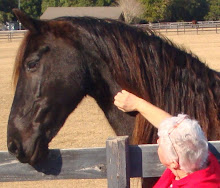
Today I’ve been twisting fuzzy pieces of colored string together to make a fiber necklace. I twist and twist and, when I put them down, they untwist even though I’ve tied the ends. They simply unroll. So I talked with Lisa about spinning. She said that you have to spin the fiber one way but twist it a different way when you put several strands together. It’s not as easy as it might sound.
I figured out which way the individual strings were twisted and I put them all the same way. Then I twisted the strings together in the opposite direction. I did this for two sets. But, when I tried to put them together, somehow, I got one strand turned around and as I tried to entwine them, one would unravel while the other one got tighter. Now, mind you, I didn’t discover this until I had already taped and wired the ends together and tried to put on some decorative bits. Then I realized that the pieces simply didn’t cohere.
Twisting fibers together is like twisting life’s events to make a good day. We put a different spin on different things to make the day come out the way we want it to be. Sometimes the fibers come unraveled at the end of the day, and everything we’ve done seems for nothing. Sometimes the pieces just fit right.
As we learn more and more about how to fit the parts of our lives together, we find that the fibers stay put better. First you twist one strand to the right, and then you twist the other strand to the left – the balance holds it together. What a concept!! Now if I could just figure out which direction the strands are going, I’d be in good shape. Something in the friction, maybe, keeps them together.
Again, it’s the balance, the fitting together of parts so that they don’t slide apart. It’s what we do with our days and our lives. We try to find the pattern and make the various parts of the pattern fit together and stay together. Some unravel and come apart, and some don’t. We have good days and bad days. (Brilliant observance, huh?) But, it’s the friction or lack of friction that holds the pieces together or makes them slide apart. We have to reflect on the day and the days and fit the pieces together so that they make a whole. Sometimes we need more pieces than other times. Sometimes, it’s hard to see the pattern.
I wonder how this corresponds to chaos theory or wave/particle theory. Scientists, therapists, and all sorts of people are tying their ideas to some form of one or both of these theories. Mental health practitioners talk about neurons in the brain firing in seemingly unrelated patterns – chaos, but when enough of them fire at once some sort of pattern emerges. These patterns often conform to things in nature like ferns, leaves, and morph into waves. Then, they talk about the waves of thoughts and the waves of neuron firings that form complex thought and how any one single neuron firing can change the way a thought pattern goes.
I guess as we grow older these wave patterns are more likely to be disturbed as we lose some of our neuron power. And, mental illnesses can make the chaos theory fit better than the wave theory. Training different neurons to take over previous thought patterns or develop new ones is a key to making changes in one’s life, one’s thinking and one’s happiness. I wonder if the transition from this life to whatever comes next is a realignment of our neurons into a different pattern.
My writing is sort of like chaos theory. I start with just putting words on paper – whatever is in my mind at the time. Gradually, as I write, some pattern, some logic, some reasoning becomes evident, and a theme is possible. That’s when the editing begins. Hummm. Perhaps that’s what I forget in trying to twist the pieces of the day into some sane pattern. I forget the editing; I forget to look at things from a different angle. I forget to snip and paste and reformat things to make them fit better – to make better sense of what’s happened. That’s not changing the past but changing how one interprets the past in light of the bigger picture.
An artist can see both details and overall picture, and we need to do that when we reflect on our days or weeks or lives. We need to put the details into perspective with the larger framework of our lives. Therapy, 12-step work, and meditation all help do this.
Tuesday, September 26, 2006


Monday, September 25, 2006
Stupid People
Perhaps I should stop reading blogs for a while. I continue to be amazed at the stupidity of people in positions of power. Our US politicians who utter notorious things while the microphones are still on or make statements that cause us to questions their ability to reason are just the tip of the iceberg.
People in Nottingham, England, are fussing about which way the graves face in the public cemetery. A bishop in Africa claims to “control” 70% of the world’s Anglicans. The Pope disses Islam’s founder by quoting an obscure secular text. And, GWB just keeps puttering along, leaving gaseous waste behind. People are clear-cutting older forests in order to keep their land from being protected environment for woodpeckers...ruining views for which people have paid hundreds of thousands of dollars and causing untold environmental damage from rainwater run-off.
Someone once told me that the percentage of crazy people in the world had not increased; only the total number of people had increased. So, we see more crazies than before. But, that doesn’t mean that we should elect them to office or give them space in our newspapers. Of course, given freedom of speech, which I uphold dearly, they do have a right to speak or write their opinions. And, they can exercise their property rights. And, they can be called stupid. All without repercussion from the law.
I don’t tolerate stupidity very well. In the face of increasing stupidity, I leave my pacifist leanings behind to rely on my family’s favorite epithet: “I could just slap them cross-eyed.” Whatever was God thinking when he withheld reason from some of the population? And, who do they think made them God?
And, now our voting machines are computerized for the sake of quick counting and supposed accuracy. Only, these machines can be infected with a virus program that steals votes from one candidate and gives them to another – in a random enough way to prevent detection. Then, the virus erases itself and no one knows the difference. Never mind chads and stuffed ballot boxes and dead people voting. All we have to do is shift votes that are cast by valid voters.
I’m thinking of standing on a street corner with my sign, but I don’t know what it would say. I’d have to change it every hour to get through my list of gripes about stupid people, those nearby and those far away. However, researchers say that stress shortens one’s life, and I like living even with the kooks around. And, perhaps they would say that I am one.
I’ll keep voting, writing letters, making my opinions known and talking to those in power and hope that I am speaking truth to power – not stupidity to stupidity.
Sunday, September 24, 2006
how many years?
Life/God has a sense of humor. As we grow older and our connections with our pasts grow dimmer, we reach out to renew these bonds whenever we can. Our sense of identity seems to be tied up in other people – at least our memories are tied to other people.
I remember my first semester of college which began in January 1963. I moved from a permissive home environment to a very restricted dormitory experience with a roommate who had transferred from a girls’ school in New Orleans. She had red hair and went to sleep every night listening to a classical piece. I can’t believe I’ve forgotten it; I thought it would be etched into my memory because classical music was not something I’d experience much before that. We were very different, and I avoided my dorm room.
I took chemistry, English, and I’m not sure what else. We walked to classes, of course; the campus was small. The dean of students drove her 1938 Chrysler around the campus and gave us rides when it was raining. And, it was always raining.
I don’t even remember how I met her, my friend – tall, blonde, cowboy boots and a reversible blue plaid Pendleton cape with a hood. She walked with purpose, and I think I wanted some of that purpose because I was just a bit intimidated by my dorm mates who seemed very sophisticated. And, she lived in a dorm of snobs – the elite of the social clubs lived there almost as if it were a sorority house. Although she'd been a debutante, she wasn't.
We seemed inseparable. Walks downtown in the afternoons when we could leave campus. Sitting in the Goose, trying to play ping-pong upstairs. The cape became a symbol of our friendship. The only way you could tell who was under the cape was the height. I was short.
Rain, being lost, wondering what life was about, not meeting the expectations of our families. The renegades. We rode bicycles out to Propst Park and learned how to spin a top at the local donut shop.
Somewhere along there, I began to meet and date the boys from the Air Force base just 10 miles from town. The school didn’t like this much. They wanted us to date boys from Mississippi State University – the agricultural school that was 23 miles away. Buncha hicks and snobs, if you ask me. One date was all I could stand, and I don’t even remember his name.
Once I met this tall, lanky fellow who laughed a lot, and I told her she had to meet him. I think that’s about the time I began drinking more heavily; so I don’t remember much from then until the Dean of Students came looking for me when she was missing. And, I knew, they had eloped! Horror of horrors! This just wasn’t done. Bad news at the girls’ school.
Now it’s 42 years later. Tonight we reconnected by phone. What joy! She teased me as she always had, and I just poked the fun back at her. She and her husband have apparently had a good life; they still laughed a lot tonight, big laughs, full of love and transporting me over the years. They have children and grandchildren. I’ve had a good life, too, as filled with joys and sorrows as theirs. I suspect it would be easier to tell us apart now; if only we had that cape, we could pretend once again.
Saturday, September 23, 2006
Sickness sparks creativity
Okay, it’s been sick days since I found out how sick I was and three weeks that I’ve known something was a bit wrong, several months of knowing something wasn’t quite right. So, I’m taking all this stuff for respiratory infection, ear infection, sinus infection, that whole breathing apparatus. With the antibiotics, steriods, inhalers, sprays, and pills, I am still drawing air into and pushing it out of my lungs, but that hurts sometimes. I just want you to know that I don’t feel good and I’m tired of not feeling good, and I want to get out and do things. Even going to the grocery store would be good. A ride in the boat would be great and on the jet ski would be magnificent. There it sits, all ready for me. Where am I? Inside the house looking at the gorgeous water and the means to travel upon it without the energy to even get down to it – all 35 feet away.
 However, I’ve been painting today with acrylics on paper. What began as a quilt/bedspread design has morphed into a combination of design and memory painting. Lisa took a picture of a moose at twilight and the overexposed and moving shot turned out beautifully colored shades of green, aqua, blue and a touch of brown where the moose was – but he was insignificant. I turned the picture sideways and began putting on a multi-colored medium pale wash in turquoise and blue shades.
Looked good. So, I thought I’d add pieces that could be quilted or appliquéd, wavy strips of cobalt and cerulean and teal and dark green. Well, I was doing fine until some of my darker colors began to look like the humpback whales we saw two weeks ago. So I added a little white frothy stuff around them – two blobs of dark that began to look more like something in water instead of moose in trees.
Continuing to shift from quilt pattern with sharp lines to painting with softer color changes, I created a picture that is nothing like my concept when I began. It even has darker rocks that remind me of the shoreline along the fjords, and some fireweed and a pretty yellow triangle tree...all very subtly done, you understand.
 But, it’s not a quilt pattern, and it’s too stark to be a really pleasant painting. So, I don’t know exactly what I’ve created. I do know that making such a quilt (and I dreamed it for the king size bed) would be a undertaking that would terminated by my moved to a nursing home or a cemetery. Of course, it would be gorgeous, and I’d love to try it, but what about my other dream projects.
Seems like the trip has sparked creative dreams. First the quilt came. Then, I dreamed a fiber necklace using the dyed porcupine quills, and I’ve almost figured out how to make what I saw in my dream. Next came the little purses with quills and beading and some crystals just to make them snappy. And, today’s nap-time dream was a mandala that depicted my strengths and major life events – sort of like the totem pole I dreamed on the ship after we’d been in Sitka.
Some of these things I dream, I have no idea how to create. With some of them, I know the techniques, but I’m not good at them. With others, the patterns and makings are just too complicated and take to long to hold my interest. And, some of them may come to fruition. I think I may go around taking more blurry pictures just to see what ideas they spark in my dreams.
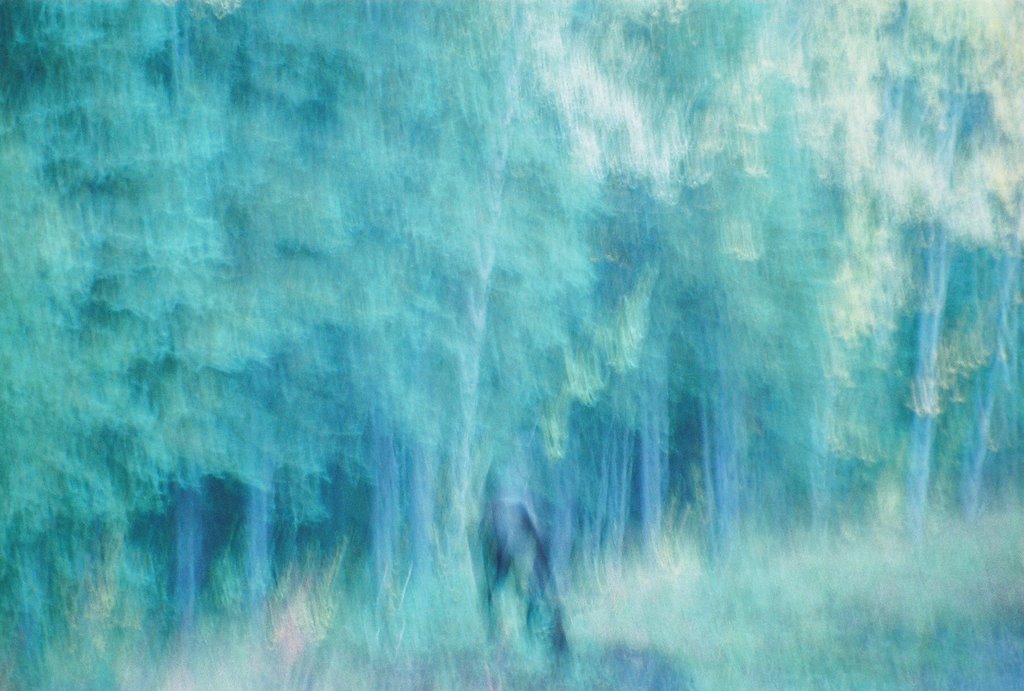 However, I’ve been painting today with acrylics on paper. What began as a quilt/bedspread design has morphed into a combination of design and memory painting. Lisa took a picture of a moose at twilight and the overexposed and moving shot turned out beautifully colored shades of green, aqua, blue and a touch of brown where the moose was – but he was insignificant. I turned the picture sideways and began putting on a multi-colored medium pale wash in turquoise and blue shades.
Looked good. So, I thought I’d add pieces that could be quilted or appliquéd, wavy strips of cobalt and cerulean and teal and dark green. Well, I was doing fine until some of my darker colors began to look like the humpback whales we saw two weeks ago. So I added a little white frothy stuff around them – two blobs of dark that began to look more like something in water instead of moose in trees.
Continuing to shift from quilt pattern with sharp lines to painting with softer color changes, I created a picture that is nothing like my concept when I began. It even has darker rocks that remind me of the shoreline along the fjords, and some fireweed and a pretty yellow triangle tree...all very subtly done, you understand.
 But, it’s not a quilt pattern, and it’s too stark to be a really pleasant painting. So, I don’t know exactly what I’ve created. I do know that making such a quilt (and I dreamed it for the king size bed) would be a undertaking that would terminated by my moved to a nursing home or a cemetery. Of course, it would be gorgeous, and I’d love to try it, but what about my other dream projects.
Seems like the trip has sparked creative dreams. First the quilt came. Then, I dreamed a fiber necklace using the dyed porcupine quills, and I’ve almost figured out how to make what I saw in my dream. Next came the little purses with quills and beading and some crystals just to make them snappy. And, today’s nap-time dream was a mandala that depicted my strengths and major life events – sort of like the totem pole I dreamed on the ship after we’d been in Sitka.
Some of these things I dream, I have no idea how to create. With some of them, I know the techniques, but I’m not good at them. With others, the patterns and makings are just too complicated and take to long to hold my interest. And, some of them may come to fruition. I think I may go around taking more blurry pictures just to see what ideas they spark in my dreams.
Saturday, September 16, 2006
Can't we?
We seem to have more heroes now than in the last few years – not just heroes in our own communities, but heroes in foreign countries, heroes in our nation. A novelist, who is also a dentist, in Egypt has developed a large following, and he is promoting peace and understanding. A Native Alaskan woman closes her shop during the busy tourist season to take someone to the doctor. The local churches collect enough food to feed the hungry from a food pantry and soup kitchen.
These sentences have a comforting feeling of continuance. Whatever the state of the world, medical care, good writing, and food will continue. But, I wonder if this sense of heroes and continuing life would be the same if the house next door to us had been bombed in a recent foray by people who thought they were different from us. What would my perception be if the KKK had burned a cross in my front yard or torched my church (which they probably wouldn’t do because most of them are members there)?
How secure would I feel about having so many windows to let in the sunshine if tanks rumbled along my road? The possessions I have would be immaterial in comparison with life. I would be concentrating on getting enough food to feed us, on purifying the water so we could drink, on locking doors and being afraid of visitors.
Being thankful for our safety and well-being is always in order, but sometimes we need to be reminded that others do not have the comfortable lives that we do. And, we can work towards their well-being one person at a time, one good deed at time, one letter written to those in power, one donation to feed the hungry. One by one, we can win. Or at least, I think we can. Can’t we?
Friday, September 15, 2006
Understanding through Discussion

D and I have been friends for more than 30 years. She is opinionated, passionate, vocal, involved, and analytical. I am opinionated (but on the other hand), painfully passionate, sometimes vocal, occasionally involved, and intuitive. Needless to say, our friendship has been interesting – sometimes up, sometimes paused, but always faithful. We’ve been geographically apart except for occasional visits and telephone conversations for many years, but the anxiety that rises from our discussions is strong. She makes me think. I’m not sure what I do for her, but she’s said these discussions are difficult.
Still, we discuss. Still, we present our ideas in our words and our experiences. Still, we misunderstand. Still, we ask for clarification. Still we wrestle with issues that concern our lives, the nation, the world.
We are both liberals, both gay, both Episcopalians, and so on. We love good books although we differ in what we call a good book. We generally agree on the most important aspects of life – love (essential), faithfulness (expected), peace (one person at a time, one country at a time, one life at a time), hope (necessary for life), food (love it), health (struggling), exercise (not), and a host of other things. She is like the sister I never had, and I deeply honor, love and respect her.
However, our not being able to explain our thoughts/feelings in words that really make sense to the other is sometimes frustrating, but always rewarding. I don’t understand how we can agree on so many things and still need so much clarification about what we write to one another. Sometimes I have to read her sentences several times before I even grasp what she’s talking about. And, I wonder, did I really say that – but she quotes from my emails – yes, I really said that. Well, what did I mean when I said that? Was it a reflective comment based on much thought or was it an idle simile that seemed appropriate at the time?
If D and I can agree on basics and more than basics but still have difficulty making our views known to one another, how much more difficult it must be for those on opposing sides of any issue to explain themselves to the others. Perhaps they don’t even agree on the words their side is using even if they agree on the principles.
What I do know is that such discussions are essential, and they must be honest, open and frank. The people involved must respect one another and trust each other to some degree. In diversity seminars, we focus on similarities in order to get people to work together and live together in peace. Sometimes, we should focus on the differences that cannot be resolved in hopes that understanding and tolerance will occur.
Let us not kill one another over the meaning of the Love of God.
Wednesday, September 13, 2006
All Children of God


The bishops – liberal and conservative – met this week. They reached the same conclusion that we lay people reached earlier: unity is less important than principles. Although their statement reflected concern for each other; they found no way out of the conflict within the bounds of the Episcopal Church.
Dialogue is great; each side understands how much the others values mean and what they mean. Dialogue does not mean agreement nor resolution. Neither does time, which they recommend. Time does not heal all wounds. Time does not constrain people to agree. Although time does give us a pause to reflect.
George Dance, in writing about the 9/11 disaster, quoted psychologist Rollo May, in his book The Courage to Create: "Human freedom involves our capacity to pause between stimulus and response and, in that pause, to choose the one response toward which we wish to throw our weight." Dance continued, “It is lamentable that we did not allow that pause to move us toward a new response. We experienced terror, but we also experienced an outpouring of good will from the entire world. The pause gave us a chance to choose which stimulus would determine our one response. We could choose to respond to the good will, or to the terror. Even in our response to terror, we could choose to reverence the good will extended to us, or to indulge our fearful impulse.”
I fear that both sides of this difference in the Episcopal Church have reacted with our “fearful response”, but both have continued to do the work of God in the world. That work of feeding the hungry, clothing the naked, comforting the sick and dying – that work – the work of loving our neighbors. Or at least, loving most of them. I doubt that any church has withdrawn its funds from AIDS care, but they have said that homosexuals are second class Christians – sinners who must change their way of life. Our fears will trump our good will eventually because the liberal and conservative bellows are both working to fan those flames of fear.
I’m for including everyone in God’s promises; I even believe that everyone will eventually be included in “heaven”, whatever that is. It’s not my problem to decide who will and who will not be included. My problem is how to love those who are not so loveable and to comfort those who are sick in body, mind or soul. In Psalm 130, the poet writes, “if you, O Lord, were to count sins, who could stand?” The face of God is face of each person on earth. Each has goodness and each has sin.
I do choose with whom I associate, but I pray each day for forgiveness for judging those that I leave out of my circle. It is easier to practice my beliefs and my ministry when I am surrounded by those like me. Oh yeah, I need challenging sometimes; I need the times of trial; and I pray that God will deliver me from evil.
When the church has divided itself into sections that agree with one another, when all the dialogue is said about this topic, when we settle into a new prayer book and hymnal, we will all be children of God just like we are now. We will have sinned; we will have done good. We will have favored some and alienated others. We will be humans seeking to become more like the God we know.
Tuesday, September 12, 2006
Images as comfort

The images of blue ice, waterfalls, black mountainsides, bear chasing bear, whale flukes, faraway peaks covered in snow, friendly people, tall green trees, a pack of wolves lounging beside the fjord – they all run together, and I no longer remember where each scene was placed in that distant land of Alaska. Twelve wonderful days of sights unlike any except my few glimpses of the Rockies have made me blurringly tired.
The Episcopal Church is still sparring within itself and with others in the Anglican Communion. The war in Iraq seems no nearer resolution than before. Disasters are happening all over the globe. Individuals are still dying from diseases that may one day have cures.
But, for twelve days, I was blissfully unaware of any of this. I found moments of solitude in the midst of awesome beauty and gave thanks for the respite. For twelve days I focused on the good, the beauty, the wonder of a different world than the Southern USA. I ignored the racism and elitism and – what’s the word for economic bias?- and other such human heresies.
The sense of renewal is great. Once I recover from the exhaustion of so much greatness in such few days, I know that I will feel energized and ready to step forth into the world. For now, I am letting the images, the feelings and the hopes swirl inside me mixing into a giant cup of cocoa that will help me to bring warmth and love and hope to a hurting world.
One day in a bead shop in Fairbanks, I met Ann, a Native Alaskan woman, as well as her sister, her mother and her grandmother. We chatted about porcupine needles and how to use them in beading; I helped pick beads up from the floor where they spilled, we compared different stringing materials. Then Ann looked at the clock and said she had to go pick someone up. Before she left, she came to me and hugged me. Suddenly, I felt as if I had been anointed with precious oil and been blessed by God. For a few silent seconds, we were one. Then she was gone and I was paying for my quills and beads. Later that day at the gift shop near the pipeline, I told this story to the woman working there without mentioning a name. She said, “Oh yes, Ann is our “official” unofficial social service. She helps everyone; she is a healer.” I still get chills and warmth when I think of that hug and blessing.
Some days later in Skagway, I met a man who had been reared on a farm in Ketchikan and had raised his family in the Yukon. That day, he had brought his entire family, including grown grandchildren, to Skagway to shop and enjoy the sunshine. He was trying to get the Yukon old timers to write down or record their memories of what it was like. He said, “The world is changing, and they need to put down what they know.” He was building a website to highlight that history of the Yukon. I petted his Shitzu and we hugged on that street corner.
Meeting God in nature and in people is important in our lives. Making memories to carry us through the hard times is important. At night when my legs hurt, I replay the bead store story and the Yukon story – forgetting the pain for a few minutes and letting the connection with two people so far away help me make it through the night.
Thursday, August 24, 2006
Healthy Boundaries
Tonight we were talking about healthy boundaries, and I guess that covers everything from backyard fences to “Would you please take your hand off my shoulder?” to not feeling guilty when someone you love makes a mistake. Some boundaries require discussion and agreement; some boundaries should be assumed. You don’t touch a person unless you know your touch is welcome AND touching is not a harmful act. You do talk about how to handle finances and come to an agreement. “Pay me back when you can” is not a healthy boundary for most people.
When I was younger I borrowed money from my mother with little intention of paying it back. She didn’t ask for terms and conditions; she just handed me the money. However, she kept track of all those “loans” down to the penny, and, when she was angry with me, she brought up my debts. Finally, we talked about money and agreed that I could ask for money, she could give it or not, but the money would be a gift, not a loan. Of course, the week she died she knew exactly how much money she had given me over the past 55 years.
The other side of that was that I did not learn how to be truly independent until I was 50 years old, and she had no money to loan/give me. That would have been much less difficult lesson at 20 or 30. But, neither of us had healthy monetary boundaries. She used to laughingly complain that I would give people the shirt off my back and hers too. And, she was right. I didn’t separate my money from her money.
Growing up without healthy boundaries left me with no notion of how to set healthy adult boundaries. I let people have sex with me because it made them happy, and their happiness was my happiness. I felt guilty when my closest friends erred in their judgment, and I shared the emotional consequences of their decisions. I still tend to empathize too much with people I know well – and sometimes with those I don’t know at all. I can sense a person’s pain or anxiety standing in a check-out line, and sometimes, I carry that pain away with me. I am compelled to speak compassionately to that person.
What seems to be love beyond the call of duty may really be my lack of healthy boundaries. I get sucked into situations easily. I am learning that “No.” is a complete sentence; I don’t have to explain; I don’t have to listen to arguments; I can just say, “No.” I have to practice doing that in front of a mirror so that I can make it convincing. The assertiveness training that I took back when that was popular didn’t help much then, but I use those techniques now to maintain the boundaries I have recognized and set.
I can still be manipulated (and, believe me, I can still manipulate), but I am more aware of when that happens. I try to use the first person singular, “I”, instead of the first person plural, “We”. That helps me with boundaries. But, it’s hard; I still try to think like the other person; I try to solve others’ problems whether they want my help or not. Gradually, I’m learning to keep my mouth shut. I don’t make as many snap decisions as I once did.
Still, I mostly go with my gut feelings, and sometimes I have to backtrack to set those boundaries that I could have put in place in the beginning. Tough love. Sensible love. Unfortunately, love is a wild thing and cannot be controlled. Jesus modeled the example I try to follow: He said to the man who couldn’t walk, “Take up your pallet and walk.” He didn’t say, “Put your arms around my neck and I’ll carry you.”
Tuesday, August 22, 2006
God's love versus the international church
God’s love is manifested in many ways, but often through the love of fellow humans. Each of us seeks a place where we can feel God’s love, a place of acceptance, a haven for, well, those who are like us in some ways. We may only share the commonality that each of us feels like an outcast from some other part of the world. We may share great ideas, or we may share many likes and dislikes. What holds us together is the feeling that we are accepted and loved by others in this place and, therefore, accepted and loved by God.
When structure gets in the way of God’s love manifest through the church, then we outcasts begin to see differences more than similarities. We become discontent and seek another place of acceptance, another place where we can feel God’s love, because, surely, God’s love for us is not in this place.
The national and international affairs of large groups like churches are directed toward concord, unity, oneness. And, that oneness often implies similarities, rejects differences, and alienates many units within that large group: leaders rebel, churches vote to leave, individuals feel outcast once more. The love of God and one another seems lost.
The most important hope offered by the church is taken from us when we argue and create divisions: the hope that God loves even me. Church is ultimately about relationships, and arguments damage relationships. If you disagree with my belief about a particular thing enough to want to worship separately from me, then I begin to wonder if God and I are still in accord. How can we be in accord if God is also in accord with someone who wishes me ill?
Certainly “the faith” has been held together by large groups working in concord. And, certainly “the faith” has been almost destroyed by these same groups. What if we focused on the smaller units of the church? Parishes and congregations are still showing love to those with whom they disagree. Pastors are still encouraging relationships with God and among the people of their group.
I know that many people in the world don’t like me because I’m gay or because I’m a woman or because I’m an educated woman. Some people don’t like me because I have white hair. But, within my parish church, I am accepted and loved; I feel God’s love in that place. I argue, I agree, I am hurt, I am healed – not by the national group or the international group – by those people within my congregation. Sometimes I just have to set aside the divisions of the world in order to see the hope of God’s love.
I can’t imagine anyone ever saying, “Now that’s a loving nation!” or “The Anglican Communion is a loving group.” I can say, “The people at St. Anne’s are loving.” or “The people at Christ Church accept me.” That kind of love tends to get lost in larger scale or more definitive structure. God’s love is mostly manifest through the good Samaritan, the woman at the well, Mary and her friends weeping at the death of her son, the wedding at Cana. The feeding of the five thousand is like a “mountain-top experience”, an unusual event that occurs very seldom – a miracle.
Tuesday, August 15, 2006
Concerns and Delights
The Blogs I’ve been reading are written by very focused minds on topics that concern the Anglican Communion. I find them fascinating, humorous and wonderfully uplifting. Yet, I continue to see and be concerned about the more personal issues.
One friend, who is in the hospital, has just been diagnosed with Borderline Personality Disorder, in addition to other psychiatric diagnoses. She will be coming home this weekend, and I pray that she has the support she needs to live.
Another friend struggles with depression that sometimes reaches to the bottom of her soul and she can’t communicate with anyone.
My godson hasn’t been in touch with me in months, and I don’t know how to reach him or if I want to reach him. He has been doing crack for over a year now.
My other godson and his wife continue on the road to disaffection and possible divorce – if only they could figure out how they could afford that.
My contractor friend struggles with the bureaucratic requirements of building codes and whimsy of inspectors while trying to make a living.
A friend who lives in another state is working more and more hours, possibly to avoid conflicts at home.
My seminary buddy is raising her three special needs grandchildren, two teenagers and a lovely elementary school age granddaughter.
My goddaughter continues to survive (Thanks be to God) and overcome the complications of having an older husband with emphysema, three special needs children (one of whom is adult and one who thinks she is), very little money and her own psychological problems.
In spite of this litany of woes, about which I am prayerfully concerned – naw, I worry about these people in addition to praying – I am joyous and content. I was watching the moonlight on the creek before I began writing this, and my spirits leapt with joy. This afternoon I watched a fish dance across the water, moving in graceful, silvery leaps about 20 feet. The mornings and late afternoons are cooler than the last few weeks, and I can sit on the porch to enjoy the breeze and the peace of this place. The glitter and gleam of my beads beckon to me with swirling inspirations that I don’t even know how to create but look forward to trying.
My alcoholic friends continue to stay sober by going to meetings, using their sponsors and working the steps.
My religious friends continue to preach about God’s love.
My glamorous friends continue to delight me with their dress and beautiful skin and loving smiles.
“Tight Buns” continues to be a loving, caring father and a concerned friend.
My kite shop owner-friends continue to sell high-flying joys that catch the wind in the sky and flutter in the breezes from porches and decks.
Grandchildren continue to amaze all their relatives.
Friends continue to visit. The ocean continues to “roar”. The clouds continue to give us rain. Our blessings are many.
Sunday, August 13, 2006
Mercy and Choice
King David’s son, Absalom, rebelled against him, not in the usual teenage way, but with soldiers and armies. He wanted power and was determined to take it. David fought back. How hard it must have been for him to war against his beloved son, and what was the young man thinking! Yet, near the end of the battles, King David sends out a message to deal gently with Absalom. The mercy of a father! David’s reign over Israel was believed to be the finest; many parts of the Hebrew Scriptures lament the passing of that era and look for it to return in the form of the Messiah.
How merciful is the father! Absalom was trying to kill his father, and, yet, his father wished him no harm, forgave him in the midst of the rebellion. David loved his son.
How merciful is our God! We are forgiven even as we sin. We are loved in spite of our rebellion. Perhaps, like David who must have seen his younger self in his son, God sees the divine image within each of us. We are loved even when we are bent on destruction. We are forgiven in the midst of hateful deeds.
Absalom’s destruction at the hands of David’s servants crushed his father. He grieved. David could not control the actions of fear and hatred within his troops for they, like we, had free will. They could choose to obey the king or not. We can choose to obey God by following Jesus, or not. So can everyone else. And, others can thwart the desires of God by their choices. Even though God may be willing to show us mercy, forgive us and save us, others may not agree. Our destruction may come at the hands of those who purport to serve the king but do not obey him.
Our dowfall and, ultimately, our death may come because we continue to choose the path away from God, because we continue to rebel and are bent on self-destruction. God has given us the ability to choose – life or death. If we turn from our rebellion, God is merciful. God can lead us and give us the choices, but we must be like Aaron who challenges the people of Israel to choose life or death, “As for me and my house, we will serve the Lord.”
Thursday, August 10, 2006
Self Centered Generalist
Yesterday a friend got a new computer; she was so excited. Computers are her “thing”. She said she was not a teenage when she discovered that she could really get excited about something (computers) and was good at working with them.
In these days, being a specialist is good, especially for your career path. You need some diversification and some cross training, but specialists get jobs and raises. Generalists don’t.
I am a generalist. I like computers and love to tinker with their innards and outtards. I like art, and I’m learning to paint. I love theology, and I want to help people have a relationship with God – of course, I’ve never figured out how to do that. I was a journalist and flak for a number of years. I’ve done some commercial photography and was good in a print shop. I organized and ran an ecumenical social service organization for a while. I’ve done some fundraising and some bad credit management of my own. I’ve worked as a temp secretary for large corporations, and I’ve pulled staples for a small-minded sweet-treat company. What I haven’t ever done is specialize.
It’s always been a source of embarrassment for me that, while I know a little bit about a lot of things, I don’t know very much about anything. I have just enough knowledge to be dangerous because I sound good and certain. I speak forcefully and with authority – even when I don’t know beans about the subject.
I’ve been reading blogs lately, and all these wonderfully written pieces don’t start with “I”. My blog would if I didn’t consciously change the opening sentence. Perhaps it’s rebellion against so many years of writing news stories that had to include all the facts in the lead sentence with never a first or second person pronoun. Perhaps I’m just self-centered and like to read my own opinion. (Not a bad idea since sometimes I inform myself of what I think by writing it in my blog.)
Perhaps the most telling thing about this observation is that I like doing lots of things. I like talking about lots of things. But, I really like reading about religion, God, theology, and justice. As I get older my attention span gets shorter; so blogs are great places for me to be happy and get excited and laugh a lot. These people decipher the jargon of politicians (both in and out of the church) and blow the chaff away, leaving only the good grainy heart of the matter for me to absorb. Thanks, y’all.
Monday, August 07, 2006
Classifications
Classifications intrigue me. One set of classifications in homiletics (writing/giving sermons) involved the senses – auditory, kinesthetic, and visual. Taste and smell were covered with the Eucharist. We were encouraged to include words in our sermons that helped people relate through the three senses. And, if you were preaching about the Passover supper or Jesus turning the water into wine at the wedding in Cana, you could hit the other two senses.
I’ve used that knowledge to reach out to individuals in all kinds of groups. I listen to them, and then I use their kind of words to respond. If they say “I feel” then I can respond with kinesthetic words and possibly reach them better than visual words, like “I see”. For instance, I could say, “What you said touched me.”
As all classifications fail to include everyone, some people don’t emphasize any of the five senses. They respond better to statements like, “I think you may be right/wrong.” Or “Your reasoning is good.” These people require a great deal more factual knowledge to convince of a position or need than others who respond to the senses.
I’m mostly a kinesthetic person. I feel, I touch, I sense. While I can consciously phrase my conversation in other terms, when I’m talking about myself, the touchy-feely stuff works best. When I’m really hurting, I want someone else to feel how I feel not to see how I feel. But, any words are better than absence. Touch is better than words.
The words that I use to express myself reflect my thought processes. If I say, “I think” then I have examined data and used reason to reach that statement. If I say, “I envision”, then I have built castles in the air, creations of art and wonder. If I say, “I hear,” I’m probably repeating gossip because my strong sense is not auditory. If I say, “I feel”, then my words are a mixture of feelings, intuition, thought, and visualization – all compacted into a gut response that may not necessarily have its basis in reason. That’s when people should listen to me because that’s my strongest way of putting things together.
Each person has strengths in different areas of the senses. Being aware of how you speak can give you clues to how to you think. Being aware of how someone else speaks can help you respond in ways that they understand best.
Sunday, August 06, 2006
A sermon
Today is the Feast of the Transfiguration: the day when some of the apostles saw Jesus on a hillside with Moses and Elijah appearing with him. And, the three were talking to one another. The gospel of Luke says they were talking about Jesus’ imminent arrival in the place where they were – apparently, heaven. Good ole Peter wanted to set up a shrine to the event and to Jesus, but he was dissuaded when a voice from the midst of a cloud that enveloped him said “This is my beloved Son,” – much like the voice at Jesus’ dunking in the river by John the Baptist.
I like to think of the Transfiguration as a strategy planning session with the elders. Jesus, much as Moses did, went up on the mountaintop to get advice, to communicate with the Creator. Possibly Moses fared better than Jesus; he heard the voice of God; we are told only that the apostles heard the voice of God at the Transfiguration. Moses got his directions directly from the One; Jesus conferred with the aides. Moses lived a long life after his encounter; Jesus died a bloody death a short while later.
So Jesus says, “Okay, I’m headed for Jerusalem where I’m going to die. Right now, this repatriation isn’t going too well; not many are following my lead, and I’m not sure that I’ve told them what they need to know. So what do you think I should do to make this journey more effective? How should I change my preaching and teaching and healing to get the most out of these last few days?”
Moses was a great leader, educated in pharaoh’s courts, and he knew about the importance of looking like a leader. Perhaps he advised Jesus about the donkey business that we celebrate on Palm Sunday. Sometime after the Transfiguration, Jesus bestowed his power upon a number of people including his apostles and another seventy that he sent out to tell the good news; so someone probably told him about getting more done by delegating. He reviewed the costs of the current program with the people who followed him – any good CEO knows the pluses and minuses of the project and tells his helpers. Elijah probably helped Jesus formulate some of the prophecies about the Day of Vengeance and the suffering and the redemption.
What a learning experience that must have been for Jesus! He had the great leaders to guide him in the most important project of his life...telling people that they could have a relationship with God and with their neighbors – a relationship of love. We can’t know how much advice he remembered, how much he forgot and how much he discounted because it was out of date. What we do know is that some of Jesus’ most powerful teaching and healing occurred after this event.
Many of us have a pretty good idea where we headed and some concept of how we’re going to die. We’ve had the benefit of the world’s greatest teachers in person, through books, news and film. We’ve heard great voices proclaim the truths of each generation.
Unfortunately, most of us are still plodding along just as we were before we heard or experienced these truths. We applaud those who are out there doing, but we sit comfortably in our homes and cars and boats and let others do.
The story of the Transfiguration is a great altar call, a true mountaintop experience. Each of us is called to witness to the good news that God is available. Each of us is called to proclaim and live out this good news using the best advice we can hear. Each of us must use our own Transfiguration as a strategy-planning session for the rest of our lives. What advice are you hearing?
Friday, August 04, 2006
Serenity
I remember my first encounters with the concept of serenity; an introverted friend pointed out that I lived in chaos. I retorted that was better than boredom – a synonym in my vocabulary for serenity. Then, my soon-to-be-partner and I argued for a couple of hours on a five hour trip about the value of serenity, and I wanted no part of it. Serenity would rob me of the excitement and creativity in my life. Serenity would mean knuckling under and taking whatever anyone else dished out. No way.
That was almost ten years ago. I got involved with a twelve-step program and met people who had something I wanted. They called it serenity. I called it sanity. So, I reached out, turned loose, examined, confessed, and did all the things they had done. Sanity was still a bit elusive but around more than before.
Then I retired to a place of peace, quiet, solitude and water. I had time to think about my life and my life decisions. I contemplated my relationships with my Mother and my significant others. I dreamed about events that had happened many years ago. As I accepted the person I had been and turned loose of the guilty and shame, I felt a sense of depression overtake me – at least that is the only word I had to describe the missing anger in my life.
One day, someone asked me if I could be mistaking serenity for depression. Since I had never felt serenity, I had no idea what it was like. I listened carefully as others described their serenity, and, wonder of wonders, I discovered that I had gained some measure of serenity. I was amazed. Boredom was not part of it. A lack of creativity was not part of it. My decisions were better. My health was better. And, I was truly very happy.
Serenity is now something I cherish, and I guard it carefully. When I find it disappearing, I sit down and examine where I have departed from it – for serenity does not leave me; I leave it. It’s like God. When I feel the absence of God, I wonder where I have strayed from our friendship. God didn’t move; I did. The absence of God and the absence of serenity seem to go hand in hand for me. As I return to a daily verbal, kinesthetic and meditative relationship with God, serenity returns to my life.
Gaining serenity has meant that I must continually give up anger, over and over again. And, I must give up being angry that I continue to be angry. Old habits are hard to give up, but new ones that are practiced regularly eventually take the place of the old ones.
I’m trying to make serenity a habit.
Door to door by friends
Our heat index yesterday was 108. Making sun tea would have been quick as long as you got to the jar before the sun evaporated all the water. I don’t go out much on days like that, and we’ve had a lot of them lately. Earlier this week I went to the grocery store and thoroughly enjoyed the cool produce and meat sections of the store. But, back home with a trunk-load of groceries, I could not get them all inside before I was panting and had to rest. I brought inside only those things that needed refrigeration.
Younger people without asthma and allergies can cope with the heat better, and I am grateful for them. I can remember being one of those and helping people who needed things done during the extremes of cold or hot weather. That’s not who I am now. I’m a 60-year-old who is hampered by breathing problems.
Yesterday, a friend came to get me in her already cool car and took me to lunch. She dropped me off at the door and I went inside to wait for her. Likewise, while I was getting a refill for my iced tea, she got the car and was waiting for me at the door. How delightful it was to be able to accept help in order to keep doing the things I enjoy. And, how absolutely wonderful to have friends who will help.
We also went to the grocery store to pick up something I had forgotten, and, again, I got the door to door treatment. I arrived home still breathing fine and having had a great time. Just getting out for a couple of hours really keeps away the cabin fever.
Today promises to be another scorcher; so I’m not sure what I’ll do. I usually go to a Friday noon meeting in another town; perhaps I’ll let my partner drive while I enjoy the air conditioned car – door to door service by those who breathe better than I.
Thanks, y’all!
Tuesday, August 01, 2006
Learning to paint
For most of my life I have had pictures in my head; I’d look at a tree and see a drawing or a painting. Sometimes when I closed my eyes, I’d see pulsing colors much like the “skins” on MP3 songs. I could create these amazing pictures only in my head; trying to make them visible to others was much too scary. What if they thought I was crazy? What if I was/am crazy?
A friend asked me a few weeks ago why I don’t listen to music. I replied, “But, I do. I hear the songs in my head; I don’t really need to hear them with my ears.” My pictures were similar. I see them in my brain; I don’t need to see them with my eyes.
Now I want to see them with my eyes. I want to share my visions with others, and I don’t have the skills to do that. However, today I took a major step towards putting my pictures on paper or canvas. I painted my first two acrylic pictures. In the first one, I experimented with the various brushed I had bought and varying amounts of water and pigment. What fun!!
Susie, my artist friend, was sitting beside me quietly painting an aquamarine and purple cat with sienna highlights. I was watching her. As she was putting whiskers on her cat, I decided that I wanted to paint the same thing. Well, sort of the same thing. At least I wanted to begin with the same picture of her cat. So I took the picture to the computer and enlarged it, sketched in outline in pencil.
Then I was afraid! What to do next? Finally, I began working with blacks and greys to get the shadows and highlights done. I pondered over the fur, the fluff around the head, the wisps on the ears. The body was awful. I had painted long black and grey strokes that resembled a barrel more than a cat body.
I did the eyes and they looked evil; so I tried to figure out what made them appear that way. I remembered some psychological tests where faces had eyes turned different ways and mouths down or up and mustaches in different forms. I added some white to the eyes (they’re lime green) and made them slightly larger. No more evil eye.
Susie and I took a break and scanned her painting into the computer and played with changing the colors. I liked the teal cat with magenta eyes and the apple green cat. We did an outline like a neon sign in the night. Such manipulation is fun!
When I returned to my painting, I lopped off the barrel body, put some bold touches on the face, giving it some form, and toned down the tiny strokes that I’d hoped would look like fur. It was a decent painting for my first session. Yahoo!
I am an artist now. Perhaps someday when my skills have improved, I may come closer to bringing those pictures in my head out for my eyes to see. It’ll be a fun journey anyway.
Monday, July 31, 2006
My faith journey
Recently I’ve encountered several “new” Episcopalians and a couple of “new” Christians. The thing that excites me about this is that people are finding hope and inspiration and fellowship and truth. I would probably be as excited about new worshippers of almost any faith. I do tend toward the more loving religions and reject the extreme positions.
That said, I’d like to share my faith journey with friends who read this. I was born near the Mississippi River in the heart of cotton farmland. When I was less than a year old, I was christened (baptized) into the Presbyterian denomination, the multigenerational faith of my father. That means that I was named as a child of God and would not necessarily go to hell for sins committed before the age of confirmation.
My mother, brother and I attended the Presbyterian church regularly. My father dropped us off and went to the other side of town to continue his drinking. Sometimes – no, frequently, he forgot to come back and get us; so we sat on the church steps in our dress clothes while townspeople passed by and stared at us.
Mother, brought up in the Baptist faith, finally got tired of the unwanted exposure to prying eyes, and we quit attending church. Instead, she played the piano and we sang hymns on Sundays. These hymns and the sense of love and faithfulness are the basis of my faith.
In my teenage years, I joined the Baptist Church in the tiny village where we had moved to get away from my father’s alcoholism. I professed my faith mainly because my mother told me that was the only way I could redeem myself from cussing at the preacher during a fire near our house. But, I attended faithfully until they asked me to quit coming because I had organized a teen club where we danced. Dancing was a sin in that tiny church, and I was an unrepentant sinner.
In my early 30s I was involved in Community Theatre and its cast parties after the final performance. One Sunday morning, as we revived somewhat from the all-night cast party, someone suggested that we go as a group to her church. I recoiled but went along because I didn’t want to be left out.
We went to the Episcopal Church of the Good Shepherd in Columbus, Mississippi. Most of the others were regular church goers of one denomination or another. I was the sinner, baptized twice, but apparently still unclean. At least I was unclean until I walked through those doors. The priest welcomed each of us with a hug and a compliment about each person’s part in the play. He had never met me; yet, he hugged me and told me what a wonderful job I had done. He could smell the alcohol on my breath and see my bleary eyes, but he didn’t care. I was a sheep of his pasture.
We all sat together, and, fortunately, we sang some songs that I knew; so all of us added to the harmony and joyfulness of the service. I have found those hugs and that joy in almost every Episcopal church I have ever attended.
I have found the same in other places as well, but Episcopal churches and 12-step programs are tops on my list.
Saturday, July 29, 2006
Limitations
Limitations are what other people have. I decided long ago that I might keep having birthdays, but I would not grow old. I would not become bent with osteoporosis nor would I have Alzheimer’s Disease. I would not die an alcoholic and probably not on a barge in the Gulf of Mexico. I did not have those limitations, and, therefore, I did not have any limitations.
Yeah, right. I figured out that I was somewhat wrong when I lost my first job because I was a woman and the company did not want a woman editor of the magazine. A few months later the anti-discrimination statue was passed, and I still believed I was invincible. After that, I never gave limitations more than a passing thought. I lost another job because I was gay; so I got married and was married for almost 25 years to two different husbands. Both of them left me – one fell in love with drugs and one fell in love with the teacher across the hall.
Limitations were still the territory of other people; I simply would not go there. I could be anything I wanted to be, go anywhere I wanted to go, and be good at what I was doing. That worked for a few years, too few. Alcohol robbed me of some good decisions and left me struggling to provide food and shelter, never mind the clothes that I love so well.
Depression was a hole in the ground or the 1930s not a life-threatening condition that I could possibly have. So, I ignored it and kept on moving along and changing jobs and setting new goals. I’ve left behind many unfulfilled goals, many jobs at which I could have been a success, and many towns where having birthdays would have been fun.
When I had my first panic attack, I began to consider limitations, specifically, my limitations. And, when a doctor friend said, “You have asthma, don’t you?”, I knew the jig was up. I did have limitations. I could not be anything that I wanted to be, and certain places were likely to be uncomfortable living from physical, mental and emotional viewpoints.
Limitations have a way of letting us know that some directions are no longer available. Somewhere along the line, I noticed that I could no longer qualify for a job as a Playboy bunny, and my overnight bags bulged with medicine bottles and inhalers. My diet was changing, my exercise patterns were supposed to be changing. Bleah.
Now, I use my limitations (and I have many) to guide me to things that I really can do well regardless of my (here’s that word again) limitations. I still like to challenge the world and those conditions that limit my being and doing, but mostly I work around them. I take what is good and try to make it better. I care for myself in ways that ameliorate the disadvantages.
Limitations are what has spurred me to stick it out in some areas and back off from others. I’ve watched babies grow into young adults; I’ve retired from the demanding fund raising jobs of the past. I’m developing my creativity in arts and crafts now, and I’m having some success. Without recognition of my limitations, I might never have found the happiness I know now.
Subscribe to:
Posts (Atom)