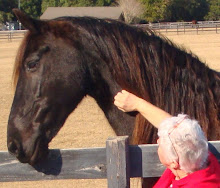
Tonight we were talking about healthy boundaries, and I guess that covers everything from backyard fences to “Would you please take your hand off my shoulder?” to not feeling guilty when someone you love makes a mistake. Some boundaries require discussion and agreement; some boundaries should be assumed. You don’t touch a person unless you know your touch is welcome AND touching is not a harmful act. You do talk about how to handle finances and come to an agreement. “Pay me back when you can” is not a healthy boundary for most people.
When I was younger I borrowed money from my mother with little intention of paying it back. She didn’t ask for terms and conditions; she just handed me the money. However, she kept track of all those “loans” down to the penny, and, when she was angry with me, she brought up my debts. Finally, we talked about money and agreed that I could ask for money, she could give it or not, but the money would be a gift, not a loan. Of course, the week she died she knew exactly how much money she had given me over the past 55 years.
The other side of that was that I did not learn how to be truly independent until I was 50 years old, and she had no money to loan/give me. That would have been much less difficult lesson at 20 or 30. But, neither of us had healthy monetary boundaries. She used to laughingly complain that I would give people the shirt off my back and hers too. And, she was right. I didn’t separate my money from her money.
Growing up without healthy boundaries left me with no notion of how to set healthy adult boundaries. I let people have sex with me because it made them happy, and their happiness was my happiness. I felt guilty when my closest friends erred in their judgment, and I shared the emotional consequences of their decisions. I still tend to empathize too much with people I know well – and sometimes with those I don’t know at all. I can sense a person’s pain or anxiety standing in a check-out line, and sometimes, I carry that pain away with me. I am compelled to speak compassionately to that person.
What seems to be love beyond the call of duty may really be my lack of healthy boundaries. I get sucked into situations easily. I am learning that “No.” is a complete sentence; I don’t have to explain; I don’t have to listen to arguments; I can just say, “No.” I have to practice doing that in front of a mirror so that I can make it convincing. The assertiveness training that I took back when that was popular didn’t help much then, but I use those techniques now to maintain the boundaries I have recognized and set.
I can still be manipulated (and, believe me, I can still manipulate), but I am more aware of when that happens. I try to use the first person singular, “I”, instead of the first person plural, “We”. That helps me with boundaries. But, it’s hard; I still try to think like the other person; I try to solve others’ problems whether they want my help or not. Gradually, I’m learning to keep my mouth shut. I don’t make as many snap decisions as I once did.
Still, I mostly go with my gut feelings, and sometimes I have to backtrack to set those boundaries that I could have put in place in the beginning. Tough love. Sensible love. Unfortunately, love is a wild thing and cannot be controlled. Jesus modeled the example I try to follow: He said to the man who couldn’t walk, “Take up your pallet and walk.” He didn’t say, “Put your arms around my neck and I’ll carry you.”
Thursday, August 24, 2006


Tuesday, August 22, 2006
God's love versus the international church
God’s love is manifested in many ways, but often through the love of fellow humans. Each of us seeks a place where we can feel God’s love, a place of acceptance, a haven for, well, those who are like us in some ways. We may only share the commonality that each of us feels like an outcast from some other part of the world. We may share great ideas, or we may share many likes and dislikes. What holds us together is the feeling that we are accepted and loved by others in this place and, therefore, accepted and loved by God.
When structure gets in the way of God’s love manifest through the church, then we outcasts begin to see differences more than similarities. We become discontent and seek another place of acceptance, another place where we can feel God’s love, because, surely, God’s love for us is not in this place.
The national and international affairs of large groups like churches are directed toward concord, unity, oneness. And, that oneness often implies similarities, rejects differences, and alienates many units within that large group: leaders rebel, churches vote to leave, individuals feel outcast once more. The love of God and one another seems lost.
The most important hope offered by the church is taken from us when we argue and create divisions: the hope that God loves even me. Church is ultimately about relationships, and arguments damage relationships. If you disagree with my belief about a particular thing enough to want to worship separately from me, then I begin to wonder if God and I are still in accord. How can we be in accord if God is also in accord with someone who wishes me ill?
Certainly “the faith” has been held together by large groups working in concord. And, certainly “the faith” has been almost destroyed by these same groups. What if we focused on the smaller units of the church? Parishes and congregations are still showing love to those with whom they disagree. Pastors are still encouraging relationships with God and among the people of their group.
I know that many people in the world don’t like me because I’m gay or because I’m a woman or because I’m an educated woman. Some people don’t like me because I have white hair. But, within my parish church, I am accepted and loved; I feel God’s love in that place. I argue, I agree, I am hurt, I am healed – not by the national group or the international group – by those people within my congregation. Sometimes I just have to set aside the divisions of the world in order to see the hope of God’s love.
I can’t imagine anyone ever saying, “Now that’s a loving nation!” or “The Anglican Communion is a loving group.” I can say, “The people at St. Anne’s are loving.” or “The people at Christ Church accept me.” That kind of love tends to get lost in larger scale or more definitive structure. God’s love is mostly manifest through the good Samaritan, the woman at the well, Mary and her friends weeping at the death of her son, the wedding at Cana. The feeding of the five thousand is like a “mountain-top experience”, an unusual event that occurs very seldom – a miracle.
When structure gets in the way of God’s love manifest through the church, then we outcasts begin to see differences more than similarities. We become discontent and seek another place of acceptance, another place where we can feel God’s love, because, surely, God’s love for us is not in this place.
The national and international affairs of large groups like churches are directed toward concord, unity, oneness. And, that oneness often implies similarities, rejects differences, and alienates many units within that large group: leaders rebel, churches vote to leave, individuals feel outcast once more. The love of God and one another seems lost.
The most important hope offered by the church is taken from us when we argue and create divisions: the hope that God loves even me. Church is ultimately about relationships, and arguments damage relationships. If you disagree with my belief about a particular thing enough to want to worship separately from me, then I begin to wonder if God and I are still in accord. How can we be in accord if God is also in accord with someone who wishes me ill?
Certainly “the faith” has been held together by large groups working in concord. And, certainly “the faith” has been almost destroyed by these same groups. What if we focused on the smaller units of the church? Parishes and congregations are still showing love to those with whom they disagree. Pastors are still encouraging relationships with God and among the people of their group.
I know that many people in the world don’t like me because I’m gay or because I’m a woman or because I’m an educated woman. Some people don’t like me because I have white hair. But, within my parish church, I am accepted and loved; I feel God’s love in that place. I argue, I agree, I am hurt, I am healed – not by the national group or the international group – by those people within my congregation. Sometimes I just have to set aside the divisions of the world in order to see the hope of God’s love.
I can’t imagine anyone ever saying, “Now that’s a loving nation!” or “The Anglican Communion is a loving group.” I can say, “The people at St. Anne’s are loving.” or “The people at Christ Church accept me.” That kind of love tends to get lost in larger scale or more definitive structure. God’s love is mostly manifest through the good Samaritan, the woman at the well, Mary and her friends weeping at the death of her son, the wedding at Cana. The feeding of the five thousand is like a “mountain-top experience”, an unusual event that occurs very seldom – a miracle.
Tuesday, August 15, 2006
Concerns and Delights
The Blogs I’ve been reading are written by very focused minds on topics that concern the Anglican Communion. I find them fascinating, humorous and wonderfully uplifting. Yet, I continue to see and be concerned about the more personal issues.
One friend, who is in the hospital, has just been diagnosed with Borderline Personality Disorder, in addition to other psychiatric diagnoses. She will be coming home this weekend, and I pray that she has the support she needs to live.
Another friend struggles with depression that sometimes reaches to the bottom of her soul and she can’t communicate with anyone.
My godson hasn’t been in touch with me in months, and I don’t know how to reach him or if I want to reach him. He has been doing crack for over a year now.
My other godson and his wife continue on the road to disaffection and possible divorce – if only they could figure out how they could afford that.
My contractor friend struggles with the bureaucratic requirements of building codes and whimsy of inspectors while trying to make a living.
A friend who lives in another state is working more and more hours, possibly to avoid conflicts at home.
My seminary buddy is raising her three special needs grandchildren, two teenagers and a lovely elementary school age granddaughter.
My goddaughter continues to survive (Thanks be to God) and overcome the complications of having an older husband with emphysema, three special needs children (one of whom is adult and one who thinks she is), very little money and her own psychological problems.
In spite of this litany of woes, about which I am prayerfully concerned – naw, I worry about these people in addition to praying – I am joyous and content. I was watching the moonlight on the creek before I began writing this, and my spirits leapt with joy. This afternoon I watched a fish dance across the water, moving in graceful, silvery leaps about 20 feet. The mornings and late afternoons are cooler than the last few weeks, and I can sit on the porch to enjoy the breeze and the peace of this place. The glitter and gleam of my beads beckon to me with swirling inspirations that I don’t even know how to create but look forward to trying.
My alcoholic friends continue to stay sober by going to meetings, using their sponsors and working the steps.
My religious friends continue to preach about God’s love.
My glamorous friends continue to delight me with their dress and beautiful skin and loving smiles.
“Tight Buns” continues to be a loving, caring father and a concerned friend.
My kite shop owner-friends continue to sell high-flying joys that catch the wind in the sky and flutter in the breezes from porches and decks.
Grandchildren continue to amaze all their relatives.
Friends continue to visit. The ocean continues to “roar”. The clouds continue to give us rain. Our blessings are many.
One friend, who is in the hospital, has just been diagnosed with Borderline Personality Disorder, in addition to other psychiatric diagnoses. She will be coming home this weekend, and I pray that she has the support she needs to live.
Another friend struggles with depression that sometimes reaches to the bottom of her soul and she can’t communicate with anyone.
My godson hasn’t been in touch with me in months, and I don’t know how to reach him or if I want to reach him. He has been doing crack for over a year now.
My other godson and his wife continue on the road to disaffection and possible divorce – if only they could figure out how they could afford that.
My contractor friend struggles with the bureaucratic requirements of building codes and whimsy of inspectors while trying to make a living.
A friend who lives in another state is working more and more hours, possibly to avoid conflicts at home.
My seminary buddy is raising her three special needs grandchildren, two teenagers and a lovely elementary school age granddaughter.
My goddaughter continues to survive (Thanks be to God) and overcome the complications of having an older husband with emphysema, three special needs children (one of whom is adult and one who thinks she is), very little money and her own psychological problems.
In spite of this litany of woes, about which I am prayerfully concerned – naw, I worry about these people in addition to praying – I am joyous and content. I was watching the moonlight on the creek before I began writing this, and my spirits leapt with joy. This afternoon I watched a fish dance across the water, moving in graceful, silvery leaps about 20 feet. The mornings and late afternoons are cooler than the last few weeks, and I can sit on the porch to enjoy the breeze and the peace of this place. The glitter and gleam of my beads beckon to me with swirling inspirations that I don’t even know how to create but look forward to trying.
My alcoholic friends continue to stay sober by going to meetings, using their sponsors and working the steps.
My religious friends continue to preach about God’s love.
My glamorous friends continue to delight me with their dress and beautiful skin and loving smiles.
“Tight Buns” continues to be a loving, caring father and a concerned friend.
My kite shop owner-friends continue to sell high-flying joys that catch the wind in the sky and flutter in the breezes from porches and decks.
Grandchildren continue to amaze all their relatives.
Friends continue to visit. The ocean continues to “roar”. The clouds continue to give us rain. Our blessings are many.
Sunday, August 13, 2006
Mercy and Choice
King David’s son, Absalom, rebelled against him, not in the usual teenage way, but with soldiers and armies. He wanted power and was determined to take it. David fought back. How hard it must have been for him to war against his beloved son, and what was the young man thinking! Yet, near the end of the battles, King David sends out a message to deal gently with Absalom. The mercy of a father! David’s reign over Israel was believed to be the finest; many parts of the Hebrew Scriptures lament the passing of that era and look for it to return in the form of the Messiah.
How merciful is the father! Absalom was trying to kill his father, and, yet, his father wished him no harm, forgave him in the midst of the rebellion. David loved his son.
How merciful is our God! We are forgiven even as we sin. We are loved in spite of our rebellion. Perhaps, like David who must have seen his younger self in his son, God sees the divine image within each of us. We are loved even when we are bent on destruction. We are forgiven in the midst of hateful deeds.
Absalom’s destruction at the hands of David’s servants crushed his father. He grieved. David could not control the actions of fear and hatred within his troops for they, like we, had free will. They could choose to obey the king or not. We can choose to obey God by following Jesus, or not. So can everyone else. And, others can thwart the desires of God by their choices. Even though God may be willing to show us mercy, forgive us and save us, others may not agree. Our destruction may come at the hands of those who purport to serve the king but do not obey him.
Our dowfall and, ultimately, our death may come because we continue to choose the path away from God, because we continue to rebel and are bent on self-destruction. God has given us the ability to choose – life or death. If we turn from our rebellion, God is merciful. God can lead us and give us the choices, but we must be like Aaron who challenges the people of Israel to choose life or death, “As for me and my house, we will serve the Lord.”
How merciful is the father! Absalom was trying to kill his father, and, yet, his father wished him no harm, forgave him in the midst of the rebellion. David loved his son.
How merciful is our God! We are forgiven even as we sin. We are loved in spite of our rebellion. Perhaps, like David who must have seen his younger self in his son, God sees the divine image within each of us. We are loved even when we are bent on destruction. We are forgiven in the midst of hateful deeds.
Absalom’s destruction at the hands of David’s servants crushed his father. He grieved. David could not control the actions of fear and hatred within his troops for they, like we, had free will. They could choose to obey the king or not. We can choose to obey God by following Jesus, or not. So can everyone else. And, others can thwart the desires of God by their choices. Even though God may be willing to show us mercy, forgive us and save us, others may not agree. Our destruction may come at the hands of those who purport to serve the king but do not obey him.
Our dowfall and, ultimately, our death may come because we continue to choose the path away from God, because we continue to rebel and are bent on self-destruction. God has given us the ability to choose – life or death. If we turn from our rebellion, God is merciful. God can lead us and give us the choices, but we must be like Aaron who challenges the people of Israel to choose life or death, “As for me and my house, we will serve the Lord.”
Thursday, August 10, 2006
Self Centered Generalist
Yesterday a friend got a new computer; she was so excited. Computers are her “thing”. She said she was not a teenage when she discovered that she could really get excited about something (computers) and was good at working with them.
In these days, being a specialist is good, especially for your career path. You need some diversification and some cross training, but specialists get jobs and raises. Generalists don’t.
I am a generalist. I like computers and love to tinker with their innards and outtards. I like art, and I’m learning to paint. I love theology, and I want to help people have a relationship with God – of course, I’ve never figured out how to do that. I was a journalist and flak for a number of years. I’ve done some commercial photography and was good in a print shop. I organized and ran an ecumenical social service organization for a while. I’ve done some fundraising and some bad credit management of my own. I’ve worked as a temp secretary for large corporations, and I’ve pulled staples for a small-minded sweet-treat company. What I haven’t ever done is specialize.
It’s always been a source of embarrassment for me that, while I know a little bit about a lot of things, I don’t know very much about anything. I have just enough knowledge to be dangerous because I sound good and certain. I speak forcefully and with authority – even when I don’t know beans about the subject.
I’ve been reading blogs lately, and all these wonderfully written pieces don’t start with “I”. My blog would if I didn’t consciously change the opening sentence. Perhaps it’s rebellion against so many years of writing news stories that had to include all the facts in the lead sentence with never a first or second person pronoun. Perhaps I’m just self-centered and like to read my own opinion. (Not a bad idea since sometimes I inform myself of what I think by writing it in my blog.)
Perhaps the most telling thing about this observation is that I like doing lots of things. I like talking about lots of things. But, I really like reading about religion, God, theology, and justice. As I get older my attention span gets shorter; so blogs are great places for me to be happy and get excited and laugh a lot. These people decipher the jargon of politicians (both in and out of the church) and blow the chaff away, leaving only the good grainy heart of the matter for me to absorb. Thanks, y’all.
In these days, being a specialist is good, especially for your career path. You need some diversification and some cross training, but specialists get jobs and raises. Generalists don’t.
I am a generalist. I like computers and love to tinker with their innards and outtards. I like art, and I’m learning to paint. I love theology, and I want to help people have a relationship with God – of course, I’ve never figured out how to do that. I was a journalist and flak for a number of years. I’ve done some commercial photography and was good in a print shop. I organized and ran an ecumenical social service organization for a while. I’ve done some fundraising and some bad credit management of my own. I’ve worked as a temp secretary for large corporations, and I’ve pulled staples for a small-minded sweet-treat company. What I haven’t ever done is specialize.
It’s always been a source of embarrassment for me that, while I know a little bit about a lot of things, I don’t know very much about anything. I have just enough knowledge to be dangerous because I sound good and certain. I speak forcefully and with authority – even when I don’t know beans about the subject.
I’ve been reading blogs lately, and all these wonderfully written pieces don’t start with “I”. My blog would if I didn’t consciously change the opening sentence. Perhaps it’s rebellion against so many years of writing news stories that had to include all the facts in the lead sentence with never a first or second person pronoun. Perhaps I’m just self-centered and like to read my own opinion. (Not a bad idea since sometimes I inform myself of what I think by writing it in my blog.)
Perhaps the most telling thing about this observation is that I like doing lots of things. I like talking about lots of things. But, I really like reading about religion, God, theology, and justice. As I get older my attention span gets shorter; so blogs are great places for me to be happy and get excited and laugh a lot. These people decipher the jargon of politicians (both in and out of the church) and blow the chaff away, leaving only the good grainy heart of the matter for me to absorb. Thanks, y’all.
Monday, August 07, 2006
Classifications
Classifications intrigue me. One set of classifications in homiletics (writing/giving sermons) involved the senses – auditory, kinesthetic, and visual. Taste and smell were covered with the Eucharist. We were encouraged to include words in our sermons that helped people relate through the three senses. And, if you were preaching about the Passover supper or Jesus turning the water into wine at the wedding in Cana, you could hit the other two senses.
I’ve used that knowledge to reach out to individuals in all kinds of groups. I listen to them, and then I use their kind of words to respond. If they say “I feel” then I can respond with kinesthetic words and possibly reach them better than visual words, like “I see”. For instance, I could say, “What you said touched me.”
As all classifications fail to include everyone, some people don’t emphasize any of the five senses. They respond better to statements like, “I think you may be right/wrong.” Or “Your reasoning is good.” These people require a great deal more factual knowledge to convince of a position or need than others who respond to the senses.
I’m mostly a kinesthetic person. I feel, I touch, I sense. While I can consciously phrase my conversation in other terms, when I’m talking about myself, the touchy-feely stuff works best. When I’m really hurting, I want someone else to feel how I feel not to see how I feel. But, any words are better than absence. Touch is better than words.
The words that I use to express myself reflect my thought processes. If I say, “I think” then I have examined data and used reason to reach that statement. If I say, “I envision”, then I have built castles in the air, creations of art and wonder. If I say, “I hear,” I’m probably repeating gossip because my strong sense is not auditory. If I say, “I feel”, then my words are a mixture of feelings, intuition, thought, and visualization – all compacted into a gut response that may not necessarily have its basis in reason. That’s when people should listen to me because that’s my strongest way of putting things together.
Each person has strengths in different areas of the senses. Being aware of how you speak can give you clues to how to you think. Being aware of how someone else speaks can help you respond in ways that they understand best.
I’ve used that knowledge to reach out to individuals in all kinds of groups. I listen to them, and then I use their kind of words to respond. If they say “I feel” then I can respond with kinesthetic words and possibly reach them better than visual words, like “I see”. For instance, I could say, “What you said touched me.”
As all classifications fail to include everyone, some people don’t emphasize any of the five senses. They respond better to statements like, “I think you may be right/wrong.” Or “Your reasoning is good.” These people require a great deal more factual knowledge to convince of a position or need than others who respond to the senses.
I’m mostly a kinesthetic person. I feel, I touch, I sense. While I can consciously phrase my conversation in other terms, when I’m talking about myself, the touchy-feely stuff works best. When I’m really hurting, I want someone else to feel how I feel not to see how I feel. But, any words are better than absence. Touch is better than words.
The words that I use to express myself reflect my thought processes. If I say, “I think” then I have examined data and used reason to reach that statement. If I say, “I envision”, then I have built castles in the air, creations of art and wonder. If I say, “I hear,” I’m probably repeating gossip because my strong sense is not auditory. If I say, “I feel”, then my words are a mixture of feelings, intuition, thought, and visualization – all compacted into a gut response that may not necessarily have its basis in reason. That’s when people should listen to me because that’s my strongest way of putting things together.
Each person has strengths in different areas of the senses. Being aware of how you speak can give you clues to how to you think. Being aware of how someone else speaks can help you respond in ways that they understand best.
Sunday, August 06, 2006
A sermon
Today is the Feast of the Transfiguration: the day when some of the apostles saw Jesus on a hillside with Moses and Elijah appearing with him. And, the three were talking to one another. The gospel of Luke says they were talking about Jesus’ imminent arrival in the place where they were – apparently, heaven. Good ole Peter wanted to set up a shrine to the event and to Jesus, but he was dissuaded when a voice from the midst of a cloud that enveloped him said “This is my beloved Son,” – much like the voice at Jesus’ dunking in the river by John the Baptist.
I like to think of the Transfiguration as a strategy planning session with the elders. Jesus, much as Moses did, went up on the mountaintop to get advice, to communicate with the Creator. Possibly Moses fared better than Jesus; he heard the voice of God; we are told only that the apostles heard the voice of God at the Transfiguration. Moses got his directions directly from the One; Jesus conferred with the aides. Moses lived a long life after his encounter; Jesus died a bloody death a short while later.
So Jesus says, “Okay, I’m headed for Jerusalem where I’m going to die. Right now, this repatriation isn’t going too well; not many are following my lead, and I’m not sure that I’ve told them what they need to know. So what do you think I should do to make this journey more effective? How should I change my preaching and teaching and healing to get the most out of these last few days?”
Moses was a great leader, educated in pharaoh’s courts, and he knew about the importance of looking like a leader. Perhaps he advised Jesus about the donkey business that we celebrate on Palm Sunday. Sometime after the Transfiguration, Jesus bestowed his power upon a number of people including his apostles and another seventy that he sent out to tell the good news; so someone probably told him about getting more done by delegating. He reviewed the costs of the current program with the people who followed him – any good CEO knows the pluses and minuses of the project and tells his helpers. Elijah probably helped Jesus formulate some of the prophecies about the Day of Vengeance and the suffering and the redemption.
What a learning experience that must have been for Jesus! He had the great leaders to guide him in the most important project of his life...telling people that they could have a relationship with God and with their neighbors – a relationship of love. We can’t know how much advice he remembered, how much he forgot and how much he discounted because it was out of date. What we do know is that some of Jesus’ most powerful teaching and healing occurred after this event.
Many of us have a pretty good idea where we headed and some concept of how we’re going to die. We’ve had the benefit of the world’s greatest teachers in person, through books, news and film. We’ve heard great voices proclaim the truths of each generation.
Unfortunately, most of us are still plodding along just as we were before we heard or experienced these truths. We applaud those who are out there doing, but we sit comfortably in our homes and cars and boats and let others do.
The story of the Transfiguration is a great altar call, a true mountaintop experience. Each of us is called to witness to the good news that God is available. Each of us is called to proclaim and live out this good news using the best advice we can hear. Each of us must use our own Transfiguration as a strategy-planning session for the rest of our lives. What advice are you hearing?
I like to think of the Transfiguration as a strategy planning session with the elders. Jesus, much as Moses did, went up on the mountaintop to get advice, to communicate with the Creator. Possibly Moses fared better than Jesus; he heard the voice of God; we are told only that the apostles heard the voice of God at the Transfiguration. Moses got his directions directly from the One; Jesus conferred with the aides. Moses lived a long life after his encounter; Jesus died a bloody death a short while later.
So Jesus says, “Okay, I’m headed for Jerusalem where I’m going to die. Right now, this repatriation isn’t going too well; not many are following my lead, and I’m not sure that I’ve told them what they need to know. So what do you think I should do to make this journey more effective? How should I change my preaching and teaching and healing to get the most out of these last few days?”
Moses was a great leader, educated in pharaoh’s courts, and he knew about the importance of looking like a leader. Perhaps he advised Jesus about the donkey business that we celebrate on Palm Sunday. Sometime after the Transfiguration, Jesus bestowed his power upon a number of people including his apostles and another seventy that he sent out to tell the good news; so someone probably told him about getting more done by delegating. He reviewed the costs of the current program with the people who followed him – any good CEO knows the pluses and minuses of the project and tells his helpers. Elijah probably helped Jesus formulate some of the prophecies about the Day of Vengeance and the suffering and the redemption.
What a learning experience that must have been for Jesus! He had the great leaders to guide him in the most important project of his life...telling people that they could have a relationship with God and with their neighbors – a relationship of love. We can’t know how much advice he remembered, how much he forgot and how much he discounted because it was out of date. What we do know is that some of Jesus’ most powerful teaching and healing occurred after this event.
Many of us have a pretty good idea where we headed and some concept of how we’re going to die. We’ve had the benefit of the world’s greatest teachers in person, through books, news and film. We’ve heard great voices proclaim the truths of each generation.
Unfortunately, most of us are still plodding along just as we were before we heard or experienced these truths. We applaud those who are out there doing, but we sit comfortably in our homes and cars and boats and let others do.
The story of the Transfiguration is a great altar call, a true mountaintop experience. Each of us is called to witness to the good news that God is available. Each of us is called to proclaim and live out this good news using the best advice we can hear. Each of us must use our own Transfiguration as a strategy-planning session for the rest of our lives. What advice are you hearing?
Friday, August 04, 2006
Serenity
I remember my first encounters with the concept of serenity; an introverted friend pointed out that I lived in chaos. I retorted that was better than boredom – a synonym in my vocabulary for serenity. Then, my soon-to-be-partner and I argued for a couple of hours on a five hour trip about the value of serenity, and I wanted no part of it. Serenity would rob me of the excitement and creativity in my life. Serenity would mean knuckling under and taking whatever anyone else dished out. No way.
That was almost ten years ago. I got involved with a twelve-step program and met people who had something I wanted. They called it serenity. I called it sanity. So, I reached out, turned loose, examined, confessed, and did all the things they had done. Sanity was still a bit elusive but around more than before.
Then I retired to a place of peace, quiet, solitude and water. I had time to think about my life and my life decisions. I contemplated my relationships with my Mother and my significant others. I dreamed about events that had happened many years ago. As I accepted the person I had been and turned loose of the guilty and shame, I felt a sense of depression overtake me – at least that is the only word I had to describe the missing anger in my life.
One day, someone asked me if I could be mistaking serenity for depression. Since I had never felt serenity, I had no idea what it was like. I listened carefully as others described their serenity, and, wonder of wonders, I discovered that I had gained some measure of serenity. I was amazed. Boredom was not part of it. A lack of creativity was not part of it. My decisions were better. My health was better. And, I was truly very happy.
Serenity is now something I cherish, and I guard it carefully. When I find it disappearing, I sit down and examine where I have departed from it – for serenity does not leave me; I leave it. It’s like God. When I feel the absence of God, I wonder where I have strayed from our friendship. God didn’t move; I did. The absence of God and the absence of serenity seem to go hand in hand for me. As I return to a daily verbal, kinesthetic and meditative relationship with God, serenity returns to my life.
Gaining serenity has meant that I must continually give up anger, over and over again. And, I must give up being angry that I continue to be angry. Old habits are hard to give up, but new ones that are practiced regularly eventually take the place of the old ones.
I’m trying to make serenity a habit.
That was almost ten years ago. I got involved with a twelve-step program and met people who had something I wanted. They called it serenity. I called it sanity. So, I reached out, turned loose, examined, confessed, and did all the things they had done. Sanity was still a bit elusive but around more than before.
Then I retired to a place of peace, quiet, solitude and water. I had time to think about my life and my life decisions. I contemplated my relationships with my Mother and my significant others. I dreamed about events that had happened many years ago. As I accepted the person I had been and turned loose of the guilty and shame, I felt a sense of depression overtake me – at least that is the only word I had to describe the missing anger in my life.
One day, someone asked me if I could be mistaking serenity for depression. Since I had never felt serenity, I had no idea what it was like. I listened carefully as others described their serenity, and, wonder of wonders, I discovered that I had gained some measure of serenity. I was amazed. Boredom was not part of it. A lack of creativity was not part of it. My decisions were better. My health was better. And, I was truly very happy.
Serenity is now something I cherish, and I guard it carefully. When I find it disappearing, I sit down and examine where I have departed from it – for serenity does not leave me; I leave it. It’s like God. When I feel the absence of God, I wonder where I have strayed from our friendship. God didn’t move; I did. The absence of God and the absence of serenity seem to go hand in hand for me. As I return to a daily verbal, kinesthetic and meditative relationship with God, serenity returns to my life.
Gaining serenity has meant that I must continually give up anger, over and over again. And, I must give up being angry that I continue to be angry. Old habits are hard to give up, but new ones that are practiced regularly eventually take the place of the old ones.
I’m trying to make serenity a habit.
Door to door by friends
Our heat index yesterday was 108. Making sun tea would have been quick as long as you got to the jar before the sun evaporated all the water. I don’t go out much on days like that, and we’ve had a lot of them lately. Earlier this week I went to the grocery store and thoroughly enjoyed the cool produce and meat sections of the store. But, back home with a trunk-load of groceries, I could not get them all inside before I was panting and had to rest. I brought inside only those things that needed refrigeration.
Younger people without asthma and allergies can cope with the heat better, and I am grateful for them. I can remember being one of those and helping people who needed things done during the extremes of cold or hot weather. That’s not who I am now. I’m a 60-year-old who is hampered by breathing problems.
Yesterday, a friend came to get me in her already cool car and took me to lunch. She dropped me off at the door and I went inside to wait for her. Likewise, while I was getting a refill for my iced tea, she got the car and was waiting for me at the door. How delightful it was to be able to accept help in order to keep doing the things I enjoy. And, how absolutely wonderful to have friends who will help.
We also went to the grocery store to pick up something I had forgotten, and, again, I got the door to door treatment. I arrived home still breathing fine and having had a great time. Just getting out for a couple of hours really keeps away the cabin fever.
Today promises to be another scorcher; so I’m not sure what I’ll do. I usually go to a Friday noon meeting in another town; perhaps I’ll let my partner drive while I enjoy the air conditioned car – door to door service by those who breathe better than I.
Thanks, y’all!
Younger people without asthma and allergies can cope with the heat better, and I am grateful for them. I can remember being one of those and helping people who needed things done during the extremes of cold or hot weather. That’s not who I am now. I’m a 60-year-old who is hampered by breathing problems.
Yesterday, a friend came to get me in her already cool car and took me to lunch. She dropped me off at the door and I went inside to wait for her. Likewise, while I was getting a refill for my iced tea, she got the car and was waiting for me at the door. How delightful it was to be able to accept help in order to keep doing the things I enjoy. And, how absolutely wonderful to have friends who will help.
We also went to the grocery store to pick up something I had forgotten, and, again, I got the door to door treatment. I arrived home still breathing fine and having had a great time. Just getting out for a couple of hours really keeps away the cabin fever.
Today promises to be another scorcher; so I’m not sure what I’ll do. I usually go to a Friday noon meeting in another town; perhaps I’ll let my partner drive while I enjoy the air conditioned car – door to door service by those who breathe better than I.
Thanks, y’all!
Tuesday, August 01, 2006
Learning to paint
For most of my life I have had pictures in my head; I’d look at a tree and see a drawing or a painting. Sometimes when I closed my eyes, I’d see pulsing colors much like the “skins” on MP3 songs. I could create these amazing pictures only in my head; trying to make them visible to others was much too scary. What if they thought I was crazy? What if I was/am crazy?
A friend asked me a few weeks ago why I don’t listen to music. I replied, “But, I do. I hear the songs in my head; I don’t really need to hear them with my ears.” My pictures were similar. I see them in my brain; I don’t need to see them with my eyes.
Now I want to see them with my eyes. I want to share my visions with others, and I don’t have the skills to do that. However, today I took a major step towards putting my pictures on paper or canvas. I painted my first two acrylic pictures. In the first one, I experimented with the various brushed I had bought and varying amounts of water and pigment. What fun!!
Susie, my artist friend, was sitting beside me quietly painting an aquamarine and purple cat with sienna highlights. I was watching her. As she was putting whiskers on her cat, I decided that I wanted to paint the same thing. Well, sort of the same thing. At least I wanted to begin with the same picture of her cat. So I took the picture to the computer and enlarged it, sketched in outline in pencil.
Then I was afraid! What to do next? Finally, I began working with blacks and greys to get the shadows and highlights done. I pondered over the fur, the fluff around the head, the wisps on the ears. The body was awful. I had painted long black and grey strokes that resembled a barrel more than a cat body.
I did the eyes and they looked evil; so I tried to figure out what made them appear that way. I remembered some psychological tests where faces had eyes turned different ways and mouths down or up and mustaches in different forms. I added some white to the eyes (they’re lime green) and made them slightly larger. No more evil eye.
Susie and I took a break and scanned her painting into the computer and played with changing the colors. I liked the teal cat with magenta eyes and the apple green cat. We did an outline like a neon sign in the night. Such manipulation is fun!
When I returned to my painting, I lopped off the barrel body, put some bold touches on the face, giving it some form, and toned down the tiny strokes that I’d hoped would look like fur. It was a decent painting for my first session. Yahoo!
I am an artist now. Perhaps someday when my skills have improved, I may come closer to bringing those pictures in my head out for my eyes to see. It’ll be a fun journey anyway.
A friend asked me a few weeks ago why I don’t listen to music. I replied, “But, I do. I hear the songs in my head; I don’t really need to hear them with my ears.” My pictures were similar. I see them in my brain; I don’t need to see them with my eyes.
Now I want to see them with my eyes. I want to share my visions with others, and I don’t have the skills to do that. However, today I took a major step towards putting my pictures on paper or canvas. I painted my first two acrylic pictures. In the first one, I experimented with the various brushed I had bought and varying amounts of water and pigment. What fun!!
Susie, my artist friend, was sitting beside me quietly painting an aquamarine and purple cat with sienna highlights. I was watching her. As she was putting whiskers on her cat, I decided that I wanted to paint the same thing. Well, sort of the same thing. At least I wanted to begin with the same picture of her cat. So I took the picture to the computer and enlarged it, sketched in outline in pencil.
Then I was afraid! What to do next? Finally, I began working with blacks and greys to get the shadows and highlights done. I pondered over the fur, the fluff around the head, the wisps on the ears. The body was awful. I had painted long black and grey strokes that resembled a barrel more than a cat body.
I did the eyes and they looked evil; so I tried to figure out what made them appear that way. I remembered some psychological tests where faces had eyes turned different ways and mouths down or up and mustaches in different forms. I added some white to the eyes (they’re lime green) and made them slightly larger. No more evil eye.
Susie and I took a break and scanned her painting into the computer and played with changing the colors. I liked the teal cat with magenta eyes and the apple green cat. We did an outline like a neon sign in the night. Such manipulation is fun!
When I returned to my painting, I lopped off the barrel body, put some bold touches on the face, giving it some form, and toned down the tiny strokes that I’d hoped would look like fur. It was a decent painting for my first session. Yahoo!
I am an artist now. Perhaps someday when my skills have improved, I may come closer to bringing those pictures in my head out for my eyes to see. It’ll be a fun journey anyway.
Monday, July 31, 2006
My faith journey
Recently I’ve encountered several “new” Episcopalians and a couple of “new” Christians. The thing that excites me about this is that people are finding hope and inspiration and fellowship and truth. I would probably be as excited about new worshippers of almost any faith. I do tend toward the more loving religions and reject the extreme positions.
That said, I’d like to share my faith journey with friends who read this. I was born near the Mississippi River in the heart of cotton farmland. When I was less than a year old, I was christened (baptized) into the Presbyterian denomination, the multigenerational faith of my father. That means that I was named as a child of God and would not necessarily go to hell for sins committed before the age of confirmation.
My mother, brother and I attended the Presbyterian church regularly. My father dropped us off and went to the other side of town to continue his drinking. Sometimes – no, frequently, he forgot to come back and get us; so we sat on the church steps in our dress clothes while townspeople passed by and stared at us.
Mother, brought up in the Baptist faith, finally got tired of the unwanted exposure to prying eyes, and we quit attending church. Instead, she played the piano and we sang hymns on Sundays. These hymns and the sense of love and faithfulness are the basis of my faith.
In my teenage years, I joined the Baptist Church in the tiny village where we had moved to get away from my father’s alcoholism. I professed my faith mainly because my mother told me that was the only way I could redeem myself from cussing at the preacher during a fire near our house. But, I attended faithfully until they asked me to quit coming because I had organized a teen club where we danced. Dancing was a sin in that tiny church, and I was an unrepentant sinner.
In my early 30s I was involved in Community Theatre and its cast parties after the final performance. One Sunday morning, as we revived somewhat from the all-night cast party, someone suggested that we go as a group to her church. I recoiled but went along because I didn’t want to be left out.
We went to the Episcopal Church of the Good Shepherd in Columbus, Mississippi. Most of the others were regular church goers of one denomination or another. I was the sinner, baptized twice, but apparently still unclean. At least I was unclean until I walked through those doors. The priest welcomed each of us with a hug and a compliment about each person’s part in the play. He had never met me; yet, he hugged me and told me what a wonderful job I had done. He could smell the alcohol on my breath and see my bleary eyes, but he didn’t care. I was a sheep of his pasture.
We all sat together, and, fortunately, we sang some songs that I knew; so all of us added to the harmony and joyfulness of the service. I have found those hugs and that joy in almost every Episcopal church I have ever attended.
I have found the same in other places as well, but Episcopal churches and 12-step programs are tops on my list.
That said, I’d like to share my faith journey with friends who read this. I was born near the Mississippi River in the heart of cotton farmland. When I was less than a year old, I was christened (baptized) into the Presbyterian denomination, the multigenerational faith of my father. That means that I was named as a child of God and would not necessarily go to hell for sins committed before the age of confirmation.
My mother, brother and I attended the Presbyterian church regularly. My father dropped us off and went to the other side of town to continue his drinking. Sometimes – no, frequently, he forgot to come back and get us; so we sat on the church steps in our dress clothes while townspeople passed by and stared at us.
Mother, brought up in the Baptist faith, finally got tired of the unwanted exposure to prying eyes, and we quit attending church. Instead, she played the piano and we sang hymns on Sundays. These hymns and the sense of love and faithfulness are the basis of my faith.
In my teenage years, I joined the Baptist Church in the tiny village where we had moved to get away from my father’s alcoholism. I professed my faith mainly because my mother told me that was the only way I could redeem myself from cussing at the preacher during a fire near our house. But, I attended faithfully until they asked me to quit coming because I had organized a teen club where we danced. Dancing was a sin in that tiny church, and I was an unrepentant sinner.
In my early 30s I was involved in Community Theatre and its cast parties after the final performance. One Sunday morning, as we revived somewhat from the all-night cast party, someone suggested that we go as a group to her church. I recoiled but went along because I didn’t want to be left out.
We went to the Episcopal Church of the Good Shepherd in Columbus, Mississippi. Most of the others were regular church goers of one denomination or another. I was the sinner, baptized twice, but apparently still unclean. At least I was unclean until I walked through those doors. The priest welcomed each of us with a hug and a compliment about each person’s part in the play. He had never met me; yet, he hugged me and told me what a wonderful job I had done. He could smell the alcohol on my breath and see my bleary eyes, but he didn’t care. I was a sheep of his pasture.
We all sat together, and, fortunately, we sang some songs that I knew; so all of us added to the harmony and joyfulness of the service. I have found those hugs and that joy in almost every Episcopal church I have ever attended.
I have found the same in other places as well, but Episcopal churches and 12-step programs are tops on my list.
Saturday, July 29, 2006
Limitations
Limitations are what other people have. I decided long ago that I might keep having birthdays, but I would not grow old. I would not become bent with osteoporosis nor would I have Alzheimer’s Disease. I would not die an alcoholic and probably not on a barge in the Gulf of Mexico. I did not have those limitations, and, therefore, I did not have any limitations.
Yeah, right. I figured out that I was somewhat wrong when I lost my first job because I was a woman and the company did not want a woman editor of the magazine. A few months later the anti-discrimination statue was passed, and I still believed I was invincible. After that, I never gave limitations more than a passing thought. I lost another job because I was gay; so I got married and was married for almost 25 years to two different husbands. Both of them left me – one fell in love with drugs and one fell in love with the teacher across the hall.
Limitations were still the territory of other people; I simply would not go there. I could be anything I wanted to be, go anywhere I wanted to go, and be good at what I was doing. That worked for a few years, too few. Alcohol robbed me of some good decisions and left me struggling to provide food and shelter, never mind the clothes that I love so well.
Depression was a hole in the ground or the 1930s not a life-threatening condition that I could possibly have. So, I ignored it and kept on moving along and changing jobs and setting new goals. I’ve left behind many unfulfilled goals, many jobs at which I could have been a success, and many towns where having birthdays would have been fun.
When I had my first panic attack, I began to consider limitations, specifically, my limitations. And, when a doctor friend said, “You have asthma, don’t you?”, I knew the jig was up. I did have limitations. I could not be anything that I wanted to be, and certain places were likely to be uncomfortable living from physical, mental and emotional viewpoints.
Limitations have a way of letting us know that some directions are no longer available. Somewhere along the line, I noticed that I could no longer qualify for a job as a Playboy bunny, and my overnight bags bulged with medicine bottles and inhalers. My diet was changing, my exercise patterns were supposed to be changing. Bleah.
Now, I use my limitations (and I have many) to guide me to things that I really can do well regardless of my (here’s that word again) limitations. I still like to challenge the world and those conditions that limit my being and doing, but mostly I work around them. I take what is good and try to make it better. I care for myself in ways that ameliorate the disadvantages.
Limitations are what has spurred me to stick it out in some areas and back off from others. I’ve watched babies grow into young adults; I’ve retired from the demanding fund raising jobs of the past. I’m developing my creativity in arts and crafts now, and I’m having some success. Without recognition of my limitations, I might never have found the happiness I know now.
Yeah, right. I figured out that I was somewhat wrong when I lost my first job because I was a woman and the company did not want a woman editor of the magazine. A few months later the anti-discrimination statue was passed, and I still believed I was invincible. After that, I never gave limitations more than a passing thought. I lost another job because I was gay; so I got married and was married for almost 25 years to two different husbands. Both of them left me – one fell in love with drugs and one fell in love with the teacher across the hall.
Limitations were still the territory of other people; I simply would not go there. I could be anything I wanted to be, go anywhere I wanted to go, and be good at what I was doing. That worked for a few years, too few. Alcohol robbed me of some good decisions and left me struggling to provide food and shelter, never mind the clothes that I love so well.
Depression was a hole in the ground or the 1930s not a life-threatening condition that I could possibly have. So, I ignored it and kept on moving along and changing jobs and setting new goals. I’ve left behind many unfulfilled goals, many jobs at which I could have been a success, and many towns where having birthdays would have been fun.
When I had my first panic attack, I began to consider limitations, specifically, my limitations. And, when a doctor friend said, “You have asthma, don’t you?”, I knew the jig was up. I did have limitations. I could not be anything that I wanted to be, and certain places were likely to be uncomfortable living from physical, mental and emotional viewpoints.
Limitations have a way of letting us know that some directions are no longer available. Somewhere along the line, I noticed that I could no longer qualify for a job as a Playboy bunny, and my overnight bags bulged with medicine bottles and inhalers. My diet was changing, my exercise patterns were supposed to be changing. Bleah.
Now, I use my limitations (and I have many) to guide me to things that I really can do well regardless of my (here’s that word again) limitations. I still like to challenge the world and those conditions that limit my being and doing, but mostly I work around them. I take what is good and try to make it better. I care for myself in ways that ameliorate the disadvantages.
Limitations are what has spurred me to stick it out in some areas and back off from others. I’ve watched babies grow into young adults; I’ve retired from the demanding fund raising jobs of the past. I’m developing my creativity in arts and crafts now, and I’m having some success. Without recognition of my limitations, I might never have found the happiness I know now.
Pavement technology
Yesterday as I was passing some repaving work on the highway, I was stopped beside a young man with a box about the size of a laptop writing desk with an antenna on it. I asked what it was, and he said, “It’s to test the paving and make sure it is up to our quality standards.” Then he added, “It’s an expensive little box.” The traffic began moving and he changed locations to test another spot.
I am amazed at how much our lives are being changed by technology even when we don’t know anything about it. Certainly, if I had not been stopped beside this wondrous box, I wouldn’t have know that testing methods have changed.
When my brother was working for an engineering company on the bridge that spanned the Mississippi River between Lula, Mississippi, and Helena, Arkansas, (site of lots of floating casinos now), he tested soil and pavement by dipping out soup spoons of it and taking it back to his little office shack and running weight and moisture tests and such on it. The tests took a half hour, and the men who were packing dirt or pavement had to make adjustments.
Now, he could use this little box and the pavement wouldn’t have little holes in it, and adjustments could be made almost immediately. Our roads must certainly be in better shape because of such technology. And, that excites me.
I wonder how technology is changing our lives in other areas. Plywood doesn’t seem to be getting any smoother, and I understand that the better grades of lumber are still being shipped overseas. If you want top quality lumber, you must buy it from an independent dealer and, often, plane it down to size yourself. Home and commercial building construction companies can’t afford that; so our buildings are probably not benefiting in that manner from technology.
Our air conditioning, virtually unknown in my childhood, is now marvelously efficient due to better technology. Cars are changing. Look at the hybrids. I saw a hybrid Prius the other day with a license plate that said PDM SHFT, paradigm shift. And, that’s what has happened. The model of an automobile that RE Olds brought into being and Henry Ford make so ubiquitous has changed. Gasoline motors are being replaced in many areas.
Technology has changed food production – some say for the better and some warn about problems. Apples stay firm longer in my refrigerator, and potatoes don’t sprout eyes as quickly as they once did. I hear lots of stories about genetically engineered fruits and vegetables including wheat, corn and even cotton.
I’ll bet technology enhances the fabrics that we wear without our ever even suspecting that our jeans have been close to little boxes with antennas or thread testers for fabric moving at 10 miles per hour. My jeans don’t get holes as quickly as they did when I was younger. Of course, I’m not out climbing trees and playing in the woods either.
I am grateful for the ways that technology makes my life better, and I hope that we will use it responsibily.
I am amazed at how much our lives are being changed by technology even when we don’t know anything about it. Certainly, if I had not been stopped beside this wondrous box, I wouldn’t have know that testing methods have changed.
When my brother was working for an engineering company on the bridge that spanned the Mississippi River between Lula, Mississippi, and Helena, Arkansas, (site of lots of floating casinos now), he tested soil and pavement by dipping out soup spoons of it and taking it back to his little office shack and running weight and moisture tests and such on it. The tests took a half hour, and the men who were packing dirt or pavement had to make adjustments.
Now, he could use this little box and the pavement wouldn’t have little holes in it, and adjustments could be made almost immediately. Our roads must certainly be in better shape because of such technology. And, that excites me.
I wonder how technology is changing our lives in other areas. Plywood doesn’t seem to be getting any smoother, and I understand that the better grades of lumber are still being shipped overseas. If you want top quality lumber, you must buy it from an independent dealer and, often, plane it down to size yourself. Home and commercial building construction companies can’t afford that; so our buildings are probably not benefiting in that manner from technology.
Our air conditioning, virtually unknown in my childhood, is now marvelously efficient due to better technology. Cars are changing. Look at the hybrids. I saw a hybrid Prius the other day with a license plate that said PDM SHFT, paradigm shift. And, that’s what has happened. The model of an automobile that RE Olds brought into being and Henry Ford make so ubiquitous has changed. Gasoline motors are being replaced in many areas.
Technology has changed food production – some say for the better and some warn about problems. Apples stay firm longer in my refrigerator, and potatoes don’t sprout eyes as quickly as they once did. I hear lots of stories about genetically engineered fruits and vegetables including wheat, corn and even cotton.
I’ll bet technology enhances the fabrics that we wear without our ever even suspecting that our jeans have been close to little boxes with antennas or thread testers for fabric moving at 10 miles per hour. My jeans don’t get holes as quickly as they did when I was younger. Of course, I’m not out climbing trees and playing in the woods either.
I am grateful for the ways that technology makes my life better, and I hope that we will use it responsibily.
Wednesday, July 19, 2006
Hello in there
Say hello in there...say hello. I predict that the John Prine song “Hello In There” will become popular again as the number of adults over 80 grows. It speaks to the loneliness that afflicts all ages but seems to lie as a burden of silence on the often immobile aged people. It speaks of “hollow ancient eyes”, and haven’t we all seen them?
I find myself in prayer for the elderly people who are my friends and friends of my friends. They are having surgery, getting home health care, being moved from their homes into group residences of some sort and being left increasingly alone as their friends die and the children care for grandchildren and spearhead fund drives for Alzheimers, cancer, and other diseases. They cannot understand what they’re supposed to be doing at this time of their lives. Why sit alone? Why not go ahead and die? What is God keeping me here for?
Recently in our newspaper was a series of letters after a reporter called a 62-year-old woman “elderly”. The writers protested that they were not “elderly” even though their ages exceeded 62. They were active and reactive. “Elderly” was for those with hollow ancient eyes. “Elderly” is for those who don’t talk much anymore; no one cares to hear their experiences, their thoughts, their wisdom.
And, often, the truth is that their children have heard it all multiple times, and their children have developed their own wisdom and their own stories. Their grandchildren are much too busy fighting for careers and rearing youngsters to listen to some old person who doesn’t even understand computers much less cell phones and PDAs. As their great grandchildren grow old enough to visit, they will be involved in sports and arts and text-messaging with their peers.
Fortunately (or unfortunately), for the baby boomers, peer pressure will still be high, and they can vie with one another for the accomplishments of their descendants. They can do this at least until they reach their 80s, and then their peers will begin to become silent and then to die. They will be the ones with hollow ancient eyes.
Each generation needs to value those before it and those who come after. Each grandchild needs to say “Hello in there!” occasionally – to develop a habit of companionship that just might be more important than instant messages and graduate degrees. Someone once told me that a liberal arts degree was preparation for living in one’s own inevitable solitude. A good education and ability to read or to hear are valuable to living in that solitude, but good relations with family and friends of all ages is even better.
So if you're walking down the street sometimeAnd spot some hollow ancient eyes,Please don't just pass 'em by and stareAs if you didn't care, say, "Hello in there, hello."
The habit of companionship with all ages is the feast for a lifetime.
I find myself in prayer for the elderly people who are my friends and friends of my friends. They are having surgery, getting home health care, being moved from their homes into group residences of some sort and being left increasingly alone as their friends die and the children care for grandchildren and spearhead fund drives for Alzheimers, cancer, and other diseases. They cannot understand what they’re supposed to be doing at this time of their lives. Why sit alone? Why not go ahead and die? What is God keeping me here for?
Recently in our newspaper was a series of letters after a reporter called a 62-year-old woman “elderly”. The writers protested that they were not “elderly” even though their ages exceeded 62. They were active and reactive. “Elderly” was for those with hollow ancient eyes. “Elderly” is for those who don’t talk much anymore; no one cares to hear their experiences, their thoughts, their wisdom.
And, often, the truth is that their children have heard it all multiple times, and their children have developed their own wisdom and their own stories. Their grandchildren are much too busy fighting for careers and rearing youngsters to listen to some old person who doesn’t even understand computers much less cell phones and PDAs. As their great grandchildren grow old enough to visit, they will be involved in sports and arts and text-messaging with their peers.
Fortunately (or unfortunately), for the baby boomers, peer pressure will still be high, and they can vie with one another for the accomplishments of their descendants. They can do this at least until they reach their 80s, and then their peers will begin to become silent and then to die. They will be the ones with hollow ancient eyes.
Each generation needs to value those before it and those who come after. Each grandchild needs to say “Hello in there!” occasionally – to develop a habit of companionship that just might be more important than instant messages and graduate degrees. Someone once told me that a liberal arts degree was preparation for living in one’s own inevitable solitude. A good education and ability to read or to hear are valuable to living in that solitude, but good relations with family and friends of all ages is even better.
So if you're walking down the street sometimeAnd spot some hollow ancient eyes,Please don't just pass 'em by and stareAs if you didn't care, say, "Hello in there, hello."
The habit of companionship with all ages is the feast for a lifetime.
Saturday, July 08, 2006
A new church structure?
The Anglican Communion lately has discovered that it has no structure. Rowan Williams, Archbishop of Canterbury, and others say that the Communion needs structure (An Anglican Covenant) in the church so that we can support the smaller churches struggling in countries far away from the United States or England. He says that we need to be able to say to the teetering foreign governments that “This church is backed by the Anglican Communion, and that one is not.” (See his address to the General Synod at the Anglican News Service site) Not knowing foreign politics, I must assume that he thinks that having the backing of the Anglican Communion would be a good thing.
Theo Hobson, writing in the Guardian from the United Kingdom (England), says that Williams has pressed forward with the main issue in the Anglican Communion – Do we want to be Catholic and go for unity or do we want to be moral and go for justice? The two may be exclusive of one another. Catholicity demands that we support one another in positions that we find may morally wrong. For instance, the African churches would be called upon to support the church in the United States while abhorring its stand on sexuality and women priests. On the other hand, the American churches (USA and Canada) would be called upon to support their African counterparts even though they disagree with the homophobia and subordination (and even mistreatment) of women. Each church finds the other to be morally wrong in those areas but demands acceptance of its own position.
The Biblical literalist challenges the modern interpreter; the church in the more technological nation challenges the church in the more primitive nation. Hot versus cold. The Anglican way has always been lukewarm, accepting of people with a spectrum of beliefs but a particular way of worship and mission. Nothing has changed in worship or mission, only in the details of Biblical interpretation.
This world-wide disagreement within the church seems to have secular backlashes everywhere. Churches in some countries find it difficult to speak wisdom to power when the church, because of its association with the Anglican Communion and thus the USA, is considered to be immoral and unethical. In the USA, the topic of sexuality has become a political agenda as well as a church concern. Worship and mission have taken a backseat in the church; life, liberty and the pursuit of happiness have taken a backseat in the nation. Actions in the United States could be the publicized cause of death and destruction in other countries.
If the Episcopal Church is cast out of or leaves the Anglican Communion, the loss to the world-wide church will be great for we have power and money and willingness to serve. I doubt that we are willing to sacrifice our moral stand on the inclusion of everyone in God’s house – women, gays, poor, dirty, illiterate, educated, male, all races and ethnic groups. On the other hand, the more fundamentalist churches of the Communion might gain some power when they stand for what they believe is right and Godly. Divorce is never easy, but both parties usually do survive.
Theo Hobson, writing in the Guardian from the United Kingdom (England), says that Williams has pressed forward with the main issue in the Anglican Communion – Do we want to be Catholic and go for unity or do we want to be moral and go for justice? The two may be exclusive of one another. Catholicity demands that we support one another in positions that we find may morally wrong. For instance, the African churches would be called upon to support the church in the United States while abhorring its stand on sexuality and women priests. On the other hand, the American churches (USA and Canada) would be called upon to support their African counterparts even though they disagree with the homophobia and subordination (and even mistreatment) of women. Each church finds the other to be morally wrong in those areas but demands acceptance of its own position.
The Biblical literalist challenges the modern interpreter; the church in the more technological nation challenges the church in the more primitive nation. Hot versus cold. The Anglican way has always been lukewarm, accepting of people with a spectrum of beliefs but a particular way of worship and mission. Nothing has changed in worship or mission, only in the details of Biblical interpretation.
This world-wide disagreement within the church seems to have secular backlashes everywhere. Churches in some countries find it difficult to speak wisdom to power when the church, because of its association with the Anglican Communion and thus the USA, is considered to be immoral and unethical. In the USA, the topic of sexuality has become a political agenda as well as a church concern. Worship and mission have taken a backseat in the church; life, liberty and the pursuit of happiness have taken a backseat in the nation. Actions in the United States could be the publicized cause of death and destruction in other countries.
If the Episcopal Church is cast out of or leaves the Anglican Communion, the loss to the world-wide church will be great for we have power and money and willingness to serve. I doubt that we are willing to sacrifice our moral stand on the inclusion of everyone in God’s house – women, gays, poor, dirty, illiterate, educated, male, all races and ethnic groups. On the other hand, the more fundamentalist churches of the Communion might gain some power when they stand for what they believe is right and Godly. Divorce is never easy, but both parties usually do survive.
Thursday, July 06, 2006
Whimsy
Whimsy. A flight of the imagination. When we day dream, we often indulge in whimsical fantasies. One of my favorite whimsies is that I’m attached to these giant wings floating briskly over the treetops from Lookout Mountain in Chattanooga, Tennessee. I can go there anytime and feel the warm updraft pick me up, and, sometimes, if I’m very deeply into the day dream, I can rise on this updraft in circles like the ospreys and hawks do here on my creek.
A prism sits in the window near my deck where the sun in winter shines through. What fanciful whimsical patterns it makes on the floor and table and across my legs! The reality of the spectrum of color in my life is so much bigger than the prism, a 4 inch piece of cheap glass. I can lose myself between the violet and blue, totally relaxed. Or, I can look deeply into the yellow and feel revived and energized. The red make me feel beautiful.
A journey made on a whimsy is a passage into your dreams, which are not always what you wish them to be. We spirit ourselves away from our current abode into a different world, a world where life is different, a world where we live in perpetual bliss. However, like dreams, which come from our subconscious where both good and evil live, a whimsical journey often turns into a flight back to reality. We cannot hold onto that fantasy for long; it fades and we fall.
Some people live from one whimsy to another, believing that the next one will be permanent, will become reality. Whimsy doesn’t necessarily require money, no matter what the VISA ads may say. Whimsy only requires that you cease to recognize the real world with its boons and consequences. Those who use mind altering drugs often live in whimsy until they become addicts, and the overwhelming need for another fix brings the person back to painful reality.
A whimsy addict, though, is a multiple personality, living one period in the hopes that this flight of fancy will be the career of success, living another period in the realization that no career can bring the happiness so direly sought. Yet, tomorrow’s dreams and hopes will bring another whimsy, and the person will be off to chase that castle into the warm updraft and soar above the mountains. Landings can be cruel and painful.
Whimsy is following dreams which have no basis in reality, hoping for success where you have made no preparation. Some whimsies are good, we do not expect them to become reality. I often use whimsy to relax, drifting slowly on the air with the sun on my back. I also use whimsy to help me create things – painting birdhouses, making jewelry, writing – imagining what I would like to see in my back yard if I owned a Victorian house or a I.M. Pei building. When I make jewelry, I live a different life, becoming the person who would like an onyx and crystal necklace or just a pair of earring to brighten a casual picnic day. When I write, however, I use whimsy to keep me typing because the reality is that the more I write, the better writer I become.
Whimsy, like any other part of our world, can be a creative or destructive force. I’m sure I use it both ways.
A prism sits in the window near my deck where the sun in winter shines through. What fanciful whimsical patterns it makes on the floor and table and across my legs! The reality of the spectrum of color in my life is so much bigger than the prism, a 4 inch piece of cheap glass. I can lose myself between the violet and blue, totally relaxed. Or, I can look deeply into the yellow and feel revived and energized. The red make me feel beautiful.
A journey made on a whimsy is a passage into your dreams, which are not always what you wish them to be. We spirit ourselves away from our current abode into a different world, a world where life is different, a world where we live in perpetual bliss. However, like dreams, which come from our subconscious where both good and evil live, a whimsical journey often turns into a flight back to reality. We cannot hold onto that fantasy for long; it fades and we fall.
Some people live from one whimsy to another, believing that the next one will be permanent, will become reality. Whimsy doesn’t necessarily require money, no matter what the VISA ads may say. Whimsy only requires that you cease to recognize the real world with its boons and consequences. Those who use mind altering drugs often live in whimsy until they become addicts, and the overwhelming need for another fix brings the person back to painful reality.
A whimsy addict, though, is a multiple personality, living one period in the hopes that this flight of fancy will be the career of success, living another period in the realization that no career can bring the happiness so direly sought. Yet, tomorrow’s dreams and hopes will bring another whimsy, and the person will be off to chase that castle into the warm updraft and soar above the mountains. Landings can be cruel and painful.
Whimsy is following dreams which have no basis in reality, hoping for success where you have made no preparation. Some whimsies are good, we do not expect them to become reality. I often use whimsy to relax, drifting slowly on the air with the sun on my back. I also use whimsy to help me create things – painting birdhouses, making jewelry, writing – imagining what I would like to see in my back yard if I owned a Victorian house or a I.M. Pei building. When I make jewelry, I live a different life, becoming the person who would like an onyx and crystal necklace or just a pair of earring to brighten a casual picnic day. When I write, however, I use whimsy to keep me typing because the reality is that the more I write, the better writer I become.
Whimsy, like any other part of our world, can be a creative or destructive force. I’m sure I use it both ways.
Wednesday, July 05, 2006
Delight
Pictures of delight: the bright green chameleon who lives near my fountain as he thrusts his red bib out for the world to see, the group of young people who are joyfully wake-boarding in the creek, the older man on the jet ski who is making splashing circles in the turn basin, the red-winged blackbird that is eating from our bird feeder and his mottled brown mate who likes the seed we put out for the finches, my smaller cat with his head tucked between his front legs asleep on the sunroom sofa, the flag on the back of the boat as it flutters in the breeze, a peanut butter and jelly sandwich with milk and then some dark chocolate.
Sounds of delight: the fireworks that the young people shot off from the back of the boat, the purrs of my cat, the snores of my friend who is napping, the clink of glasses in the dishwasher (thank God for dishwashers), the gentle hum of the ceiling fan, the fountain as it pumps water over the rocks and splashing down into the small pool, the happy twitter of finches.
Smells of delight: the bittersweet coffee smell as the chocolate melts in my mouth, the embracing scent of my jasmine bush, the heat smell from the porch in the sun.
All these I have right now. It is enough.
Sounds of delight: the fireworks that the young people shot off from the back of the boat, the purrs of my cat, the snores of my friend who is napping, the clink of glasses in the dishwasher (thank God for dishwashers), the gentle hum of the ceiling fan, the fountain as it pumps water over the rocks and splashing down into the small pool, the happy twitter of finches.
Smells of delight: the bittersweet coffee smell as the chocolate melts in my mouth, the embracing scent of my jasmine bush, the heat smell from the porch in the sun.
All these I have right now. It is enough.
Tuesday, July 04, 2006
Treasures and Trash, Sorting Them Out
July 4 2006
Not long ago someone asked me if I had transferred my oldest files to CDs yet. Then I read an article about CDs “rotting”, going bad around the edges. I wondered if my tape cassettes were still okay. Some VCRs are more than a decade old. What about all those 5 inch floppies that I used in my computer once? Most computers don’t even come with floppy disc drives any longer. I don’t even know the names of all the data storage units that my computer can use. Most of them are magnetic media, which does degrade after a decade or less.
So, I’m wondering about all the historical information we keep in our national and international files. Is it on magnetic media that will rot? Is it being upgraded as new media are invented? Is it being copied on a regular basis to keep it from being destroyed by mold or mites or whatever? What’s become of the Watergate Tapes? How are they stored? On what media? How many copies?
Beineke Library at Yale has special air conditioning throughout the building to help preserve its older books and a very special block that houses the oldest and best books. Still they decay. You must have special permission to go inside that block, and you must take special precautions with anything on your skin or even wear gloves. I don’t know who is allowed to touch the Guttenberg Bible.
We have created Presidential Libraries to house the memorabilia of modern presidents, and I presume that special precautions are being taken to assure longevity. I remember when a shipment from someone’s estate came to Yale. Boxes and boxes of papers, photographs, tapes, films, and even Oscars were unloaded into the repository library, where they were stored in the temperature and humidity controlled basement. But, what’s ideal for books is not necessarily ideal for tapes or decorative items or photographs.
Even more important than how we store history is how we choose the history to store. Popular acclaim is the usual criteria for saving things. If you were famous 70 years ago, your memorabilia may be shoved aside for those who are more currently famous. If we save 20 film stars’ things, will we discard ten of them in the future because we need space? We placed things in time capsules, and, when they were dug up, we found that the things were meaningless to us today. Sometimes we couldn’t even guess why they were included.
This problem is great for museums and galleries. Unfortunately, we ordinary packrats have the same sort of problem. My sea chest was full of things from my teenage years through my late 40s. When I turned 60, I decided to get rid of the chest and keep only those things with lots of meaning. So I opened the sea chest and began removing my life’s meanings piece by piece. A set of miniature china from the 1950s, still in its box, I kept. The wooden box that held our flatware when we lived on the farm, I sold. The letters from the guy who supposedly died in Vietnam, I sifted and discarded. (When I checked the list of those who died or were MIA in Vietnam, his name was not on the list.) I kept smaller things, especially those that would fit on my “special” shelves (an old moveable type tray hung on the wall). I sold newspaper clippings from the Civil War and photographs of ancestors that no one could identify. I threw away the box where mice had lived for some time inside my baby pillow. I kept a few samples of my graphics design work and my magazine editing, but most went to the recycling station along with my printing paper samples (such beautiful colors and textures).
Still, I kept half of what was there and stored it in plastic containers in my garage. What’s left has meaning only to me. When I die, someone will sell the stuff or throw it away. My grandmother’s Hoosier cabinet is going to my first cousin this month along with my great grandfather’s mantle clock and coffee grinder and some other odds and ends that might have meaning for his children. He’s the only one who might care.
Many of the concerns of our personal life are the concerns of people, organizations and governments everywhere. What do we keep? What do we replace? How do we store it? Who will want it? And, worse, what do we do with our trash?
I suspect that other personal concerns are also international concerns – relationships, violence, education, tolerance, peace (don’t yell at me versus don’t have nuclear weapons) to name a few. More important are food, clothing, shelter, health care, transportation. I can take care of my concerns, and I can help a few others do the same; but for those international needs, all I can do is begin with me.
Not long ago someone asked me if I had transferred my oldest files to CDs yet. Then I read an article about CDs “rotting”, going bad around the edges. I wondered if my tape cassettes were still okay. Some VCRs are more than a decade old. What about all those 5 inch floppies that I used in my computer once? Most computers don’t even come with floppy disc drives any longer. I don’t even know the names of all the data storage units that my computer can use. Most of them are magnetic media, which does degrade after a decade or less.
So, I’m wondering about all the historical information we keep in our national and international files. Is it on magnetic media that will rot? Is it being upgraded as new media are invented? Is it being copied on a regular basis to keep it from being destroyed by mold or mites or whatever? What’s become of the Watergate Tapes? How are they stored? On what media? How many copies?
Beineke Library at Yale has special air conditioning throughout the building to help preserve its older books and a very special block that houses the oldest and best books. Still they decay. You must have special permission to go inside that block, and you must take special precautions with anything on your skin or even wear gloves. I don’t know who is allowed to touch the Guttenberg Bible.
We have created Presidential Libraries to house the memorabilia of modern presidents, and I presume that special precautions are being taken to assure longevity. I remember when a shipment from someone’s estate came to Yale. Boxes and boxes of papers, photographs, tapes, films, and even Oscars were unloaded into the repository library, where they were stored in the temperature and humidity controlled basement. But, what’s ideal for books is not necessarily ideal for tapes or decorative items or photographs.
Even more important than how we store history is how we choose the history to store. Popular acclaim is the usual criteria for saving things. If you were famous 70 years ago, your memorabilia may be shoved aside for those who are more currently famous. If we save 20 film stars’ things, will we discard ten of them in the future because we need space? We placed things in time capsules, and, when they were dug up, we found that the things were meaningless to us today. Sometimes we couldn’t even guess why they were included.
This problem is great for museums and galleries. Unfortunately, we ordinary packrats have the same sort of problem. My sea chest was full of things from my teenage years through my late 40s. When I turned 60, I decided to get rid of the chest and keep only those things with lots of meaning. So I opened the sea chest and began removing my life’s meanings piece by piece. A set of miniature china from the 1950s, still in its box, I kept. The wooden box that held our flatware when we lived on the farm, I sold. The letters from the guy who supposedly died in Vietnam, I sifted and discarded. (When I checked the list of those who died or were MIA in Vietnam, his name was not on the list.) I kept smaller things, especially those that would fit on my “special” shelves (an old moveable type tray hung on the wall). I sold newspaper clippings from the Civil War and photographs of ancestors that no one could identify. I threw away the box where mice had lived for some time inside my baby pillow. I kept a few samples of my graphics design work and my magazine editing, but most went to the recycling station along with my printing paper samples (such beautiful colors and textures).
Still, I kept half of what was there and stored it in plastic containers in my garage. What’s left has meaning only to me. When I die, someone will sell the stuff or throw it away. My grandmother’s Hoosier cabinet is going to my first cousin this month along with my great grandfather’s mantle clock and coffee grinder and some other odds and ends that might have meaning for his children. He’s the only one who might care.
Many of the concerns of our personal life are the concerns of people, organizations and governments everywhere. What do we keep? What do we replace? How do we store it? Who will want it? And, worse, what do we do with our trash?
I suspect that other personal concerns are also international concerns – relationships, violence, education, tolerance, peace (don’t yell at me versus don’t have nuclear weapons) to name a few. More important are food, clothing, shelter, health care, transportation. I can take care of my concerns, and I can help a few others do the same; but for those international needs, all I can do is begin with me.
Monday, July 03, 2006
Happy Birthday USA
The United States of America will be 230 years old tomorrow. That’s about half the age of the unbroken Roman Empire; the Zhou Dynasty ruled China for more than 800 years. On this July 4th, I’ll ponder the future of our democracy and not its past (although I fully recognize that we must learn from the past). Some organizations are better equipped to make predictions and give warnings for the future of the world, and I won’t pretend to have their knowledge or expertise. But, it seems to me that the USA is at a crossroads, not just two roads crossing, but many.
We have traditionally wanted to admit the poor, tired and hungry to be part of our melting pot of cultures. Much of the world wants to eradicate the poor, tired and hungry people as well as those who are different. We couldn’t take them all, even if they all wanted to come to the USA. Undocumented immigrants come from all countries of the world, but in the USA, most come from Mexico and other American countries. We have built a fence to keep them out and assigned thousands of military personnel to kill or arrest those who manage to come across the border anyway. We are at a crossroads in immigration policy.
We have traditionally been a democracy of the people, by the people, and for the people. Candidates for office collectively spend billions of dollars to convince the people, and the candidate with the most money often wins. The gap between the rich and the poor has widened; mid-range homes in our state are about $200,000; the slum lords buy homes for the poor at $50,000. The number of multi-million dollar homes is increasing daily. The number of homes for poor people is decreasing daily. The number of poor people is increasing. Something is wrong with this picture. People who work full time at a minimum wage job cannot support themselves much less families. We are at a crossroads in economic policy.
One room schoolhouses were the standard for education in the early years of our country. Those who could take care of basic needs made education a priority for everyone. We currently have a program called, “No child left behind” to ensure that all children in the USA receive a good education. As with most other education programs in the last 100 years, this one is not producing the desired results. African-American youth, especially males, are still dropping out in large numbers. They are also the ones found in our prisons and drug rehabilitation programs. They cannot find jobs to meet their basic needs unless they sell drugs or other illegal substances. Education is not a priority with them – at least the kind of education that the USA is touting. A high school diploma cannot even guarantee a minimum wage job, which is poverty level. We are at an education crossroads.
Other crossroads involve community involvement, which is declining; ecological conservation; fossil energy depletion with alternatives; human relationships with divorce rates high and denial of basic rights to various kinds of relationships; consumerism fueled by disposable products, which will lead to a crisis in refuse management/disposal; unbridled pride fueled by years of being told we are the best nation in the world and leading to apathy; and fear of many things including terrorism, young black men in groups, loss of status.
Tomorrow as we turn 230 years old, let us turn our thoughts to what kind of country we want to have and bequeath to our descendants.
We have traditionally wanted to admit the poor, tired and hungry to be part of our melting pot of cultures. Much of the world wants to eradicate the poor, tired and hungry people as well as those who are different. We couldn’t take them all, even if they all wanted to come to the USA. Undocumented immigrants come from all countries of the world, but in the USA, most come from Mexico and other American countries. We have built a fence to keep them out and assigned thousands of military personnel to kill or arrest those who manage to come across the border anyway. We are at a crossroads in immigration policy.
We have traditionally been a democracy of the people, by the people, and for the people. Candidates for office collectively spend billions of dollars to convince the people, and the candidate with the most money often wins. The gap between the rich and the poor has widened; mid-range homes in our state are about $200,000; the slum lords buy homes for the poor at $50,000. The number of multi-million dollar homes is increasing daily. The number of homes for poor people is decreasing daily. The number of poor people is increasing. Something is wrong with this picture. People who work full time at a minimum wage job cannot support themselves much less families. We are at a crossroads in economic policy.
One room schoolhouses were the standard for education in the early years of our country. Those who could take care of basic needs made education a priority for everyone. We currently have a program called, “No child left behind” to ensure that all children in the USA receive a good education. As with most other education programs in the last 100 years, this one is not producing the desired results. African-American youth, especially males, are still dropping out in large numbers. They are also the ones found in our prisons and drug rehabilitation programs. They cannot find jobs to meet their basic needs unless they sell drugs or other illegal substances. Education is not a priority with them – at least the kind of education that the USA is touting. A high school diploma cannot even guarantee a minimum wage job, which is poverty level. We are at an education crossroads.
Other crossroads involve community involvement, which is declining; ecological conservation; fossil energy depletion with alternatives; human relationships with divorce rates high and denial of basic rights to various kinds of relationships; consumerism fueled by disposable products, which will lead to a crisis in refuse management/disposal; unbridled pride fueled by years of being told we are the best nation in the world and leading to apathy; and fear of many things including terrorism, young black men in groups, loss of status.
Tomorrow as we turn 230 years old, let us turn our thoughts to what kind of country we want to have and bequeath to our descendants.
Sunday, July 02, 2006
Mary Magdalene's Saint Day
Mary Magdalene’s saint day is this month, the 22nd. She is one of my favorite saints; I like people who stand out in a crowd. She gets mentioned a lot in the Bible; so I assume she was a stand-out person. She’s a woman who was persistent and loyal – all the way through the preaching and the healing and the dying and the rising from the dead. She didn’t run away from what she knew would be the smell at Jesus’ tomb. She came prepared to do what was needed. I suspect she’d been doing that for some time as she followed Jesus around the area.
Somehow I just can’t see the male apostles out amongst the crowd gathering up the leftovers after a meal. Undoubtedly Martha and Mary and Mary Magdalene were out there doing what women do – cleaning up after the rest of the family. In fact, I suspect that it was Martha who discovered someone had fishes and loaves; she was pretty resourceful.
For me, as for many others, Mary is different. She has been maligned through the years since the Pope declared her to be a prostitute and indicated that this Mary was actually the woman mentioned at the well, the woman who poured out the oil on Jesus’ feet, and several other women, whose stories are related in the Bible. He couldn’t seem to get that women were included in Jesus’ ministry; so he lumped them all together in Mary Magdalene. Pretty short sighted, if you ask me.
The commentary for her saint day says that the Eastern Church regards Mary as the equal of an apostle and the prayer is:
Somehow I just can’t see the male apostles out amongst the crowd gathering up the leftovers after a meal. Undoubtedly Martha and Mary and Mary Magdalene were out there doing what women do – cleaning up after the rest of the family. In fact, I suspect that it was Martha who discovered someone had fishes and loaves; she was pretty resourceful.
For me, as for many others, Mary is different. She has been maligned through the years since the Pope declared her to be a prostitute and indicated that this Mary was actually the woman mentioned at the well, the woman who poured out the oil on Jesus’ feet, and several other women, whose stories are related in the Bible. He couldn’t seem to get that women were included in Jesus’ ministry; so he lumped them all together in Mary Magdalene. Pretty short sighted, if you ask me.
The commentary for her saint day says that the Eastern Church regards Mary as the equal of an apostle and the prayer is:
Almighty God, whose blessed son restored Mary Magdalene to health of body and of mind, and called her to be a witness to his resurrection: Mercifully grant that by your grace we may be healed from all our infirmities and know you in the power of his unending life; who with you and the Holy Spirit lives and reigns, one God, now and for ever. Amen.
Sounds sort of like the twelve step prayer for the Seventh Step, where one asks to be healed of all “character defects.” Apparently, Mary Magdalene was healed.
Lately much has been made of the Gospel of Mary, a short piece in which she imparts special knowledge that Jesus has given her to the other apostles. Nothing in the writing is revolutionary except the idea that the men listened to a woman teaching them. I admire Mary, who may or may not have done the things mentioned in that gospel, but she certainly created enough following that someone immortalized her. Jesus promised her everlasting life, but I’m sure she didn’t expect her legend to be alive and well and debated hotly about two thousand years later.
I want to be more like Mary Magdalene: strong, loyal, doing the things that need to be done, remembered for her love.
Saturday, July 01, 2006
Roosevelt versus Bush
This week’s Time magazine has an unusual number of pages devoted to Theodore Roosevelt. I found it engrossing reading, and the illustrations and photographs helped me understand situations and locations. This two-term president is the only “modern” president on Mt. Rushmore, and I agree with Time that he was aptly chosen. This article traced his frail beginnings as an asthmatic through his last adventure along the Amazon. He was a warrior, a statesman, a radical thinker who understood the lower and middle classes of America, even though his family was “old money”.
As I read this mini-biography, I was amazed at the similarities between Teddy Roosevelt and George W. Bush. They both took charge and ignored Congress; they both believed in the superiority of the US military force; they both thought that the US should intervene in world politics; they both used might to protect what they felt was right; they both reckoned the US as the strongest nation on earth; and they were both right and wrong.
These two great leaders have a major difference in my opinion. Roosevelt looked toward the future in many directions, not just the immediate future but the future for generations that he could never know. Bush is short-sighted, looking only to sustain the status quo, to keep the vision of “America the Great” in the world’s sight. He has copied some of Roosevelt’s powerful moves but with the wrong reasons.
Power corrupts. The United States has a system in place that should prevent too much power from accumulating in any one person or group. Roosevelt knew about power and how to use it to his advantage; he considered his advantage to be the same as the people of the United States. If it was good for the masses, then it was good for Roosevelt. His outlook was to spread power around for the most good and most effectiveness. His vision of the future included all people, not the top 20 percent.
Bush’s moves in the Middle East seem motivated less by what is best for the masses of people in our country than by what makes the US seem a dominant power. The bullying of nations and the selective use of resources in solving international problems is not the proper use of power. Bush’s vision doesn’t seem to extend past his buddies and those of his economic class. His world vision includes neither preservation of resources such as national forests and parklands nor the exploration of alternative sources of energy to fossil fuels. He seems to use the media and his public relations staff to convince the world of US power (his power) instead of educating the world about potentials for great good or great harm.
Bush’s assurance that his military actions are designed to keep the United States free and safe are just words. Terrorism and guerilla tactics are almost impossible to control. We have been training foreign militia in these tactics for years at the School of the Americas. We have used them in seeing that US friendly leaders were put into office in countries around the world – Chile, Iran, South Korea.
I wish that Bush had more concern for future generations as he seeks to build a stronger United States, more concern for the earth itself, more concern for being a visionary for a good that extends beyond the bounds of his religious beliefs.
As I read this mini-biography, I was amazed at the similarities between Teddy Roosevelt and George W. Bush. They both took charge and ignored Congress; they both believed in the superiority of the US military force; they both thought that the US should intervene in world politics; they both used might to protect what they felt was right; they both reckoned the US as the strongest nation on earth; and they were both right and wrong.
These two great leaders have a major difference in my opinion. Roosevelt looked toward the future in many directions, not just the immediate future but the future for generations that he could never know. Bush is short-sighted, looking only to sustain the status quo, to keep the vision of “America the Great” in the world’s sight. He has copied some of Roosevelt’s powerful moves but with the wrong reasons.
Power corrupts. The United States has a system in place that should prevent too much power from accumulating in any one person or group. Roosevelt knew about power and how to use it to his advantage; he considered his advantage to be the same as the people of the United States. If it was good for the masses, then it was good for Roosevelt. His outlook was to spread power around for the most good and most effectiveness. His vision of the future included all people, not the top 20 percent.
Bush’s moves in the Middle East seem motivated less by what is best for the masses of people in our country than by what makes the US seem a dominant power. The bullying of nations and the selective use of resources in solving international problems is not the proper use of power. Bush’s vision doesn’t seem to extend past his buddies and those of his economic class. His world vision includes neither preservation of resources such as national forests and parklands nor the exploration of alternative sources of energy to fossil fuels. He seems to use the media and his public relations staff to convince the world of US power (his power) instead of educating the world about potentials for great good or great harm.
Bush’s assurance that his military actions are designed to keep the United States free and safe are just words. Terrorism and guerilla tactics are almost impossible to control. We have been training foreign militia in these tactics for years at the School of the Americas. We have used them in seeing that US friendly leaders were put into office in countries around the world – Chile, Iran, South Korea.
I wish that Bush had more concern for future generations as he seeks to build a stronger United States, more concern for the earth itself, more concern for being a visionary for a good that extends beyond the bounds of his religious beliefs.
Thursday, June 29, 2006
Risk
Only those who will risk going too far can possibly find out how far one can go.
If you aren't in over your head, how do you know how tall you are?
For us, there is only the trying. The rest is not our business.
T. S. Eliot
Poet T.S. Eliot speaks frequently about taking risks and about the beginning being the end and the end the beginning. Poets tend to go on and on about their favorite themes. And, if we resonate with their thinking, we tend to quote these pieces.
(I can’t remember who said what long enough to quote anything. I can’t even tell you more the locations of more than three Bible verses, and I learned many in Vacation Bible School and should have learned more in seminary and several years of preaching. I can tell you the stories, but I can’t tell you where to find them or who said them.)
However, the topic of this blog is taking risks. Risk is defined as “the possibility of suffering harm or loss; danger” or “a factor, thing, element, or course involving uncertain danger; a hazard”.
But, I think that the definition of risk should include the possibility of gaining something good. For example, last year we went parasailing. With us on the boat were a woman and her 80plus year old mother. The older woman was in pretty good health, but she might have decided that the risk of breaking a bone in landing or having an accident outweighed the possibility of having a thrill and a great time of bonding with her daughter. So, up they went, side by side; the risk of having a good time outweighed any negatives.
Sometimes we decline to do things because we are unsure about what we might gain. Everything in life has good points and bad points, and we probably should consider both the good and the bad. When we decide to “go for it”, we are risking the good. It might happen. Of course, a spectrum of possibilities exists; we might be risking the bad. Take the chance!
I suppose in my younger years, I nearly always chose to risk the possibility of something gained rather than something lost. And, I don’t regret many of those choices. I had a very good time throughout most of my life. Bad times came and went; the good times were so good that I often forgot about the bad ones. I laughed, I cried, I loved, I had lots of thrills because I dared to go the next step. I didn’t need a roller coaster; I lived one. And, I loved it; just listen to my stories. The wilder, the better. No drugs except alcohol, thank you – and eventually that went by the wayside. I didn’t need to get high; I was high on life.
I didn’t succeed financially; I didn’t make a dent in the career fields that I tried; I didn’t settle down and raise a family; but I do have more friends than I can count, and I’ve lived in lots of great places; I’ve eaten all kinds of foods; and I’m not through.
I want to do a few more weird and wild things before I’m done. I want to hang glide; I want to ride a motorcycle; I want to shave my head; I want to dye my hair red; I want a pedicure; I want to live in New York for a few months; I want to travel to some exotic places; I want to drive a hybrid car; I want to hold some more babies; I want to sit beside friends who are dying; I want to feel the grace of winter and the warmth of sunshine. I want to live a while longer and bit further.
New things renew my soul...even the things we call bad things. I want to continue to feel and experience and sense and delight and moan and whine. As I get older, some things are beyond my ability to do, but I want to do what I can do while I can still do it. And, I want to take my friends along for the joy ride.
Catch my coat tails; I think I’m high again and risking having a good time.
If you aren't in over your head, how do you know how tall you are?
For us, there is only the trying. The rest is not our business.
T. S. Eliot
Poet T.S. Eliot speaks frequently about taking risks and about the beginning being the end and the end the beginning. Poets tend to go on and on about their favorite themes. And, if we resonate with their thinking, we tend to quote these pieces.
(I can’t remember who said what long enough to quote anything. I can’t even tell you more the locations of more than three Bible verses, and I learned many in Vacation Bible School and should have learned more in seminary and several years of preaching. I can tell you the stories, but I can’t tell you where to find them or who said them.)
However, the topic of this blog is taking risks. Risk is defined as “the possibility of suffering harm or loss; danger” or “a factor, thing, element, or course involving uncertain danger; a hazard”.
But, I think that the definition of risk should include the possibility of gaining something good. For example, last year we went parasailing. With us on the boat were a woman and her 80plus year old mother. The older woman was in pretty good health, but she might have decided that the risk of breaking a bone in landing or having an accident outweighed the possibility of having a thrill and a great time of bonding with her daughter. So, up they went, side by side; the risk of having a good time outweighed any negatives.
Sometimes we decline to do things because we are unsure about what we might gain. Everything in life has good points and bad points, and we probably should consider both the good and the bad. When we decide to “go for it”, we are risking the good. It might happen. Of course, a spectrum of possibilities exists; we might be risking the bad. Take the chance!
I suppose in my younger years, I nearly always chose to risk the possibility of something gained rather than something lost. And, I don’t regret many of those choices. I had a very good time throughout most of my life. Bad times came and went; the good times were so good that I often forgot about the bad ones. I laughed, I cried, I loved, I had lots of thrills because I dared to go the next step. I didn’t need a roller coaster; I lived one. And, I loved it; just listen to my stories. The wilder, the better. No drugs except alcohol, thank you – and eventually that went by the wayside. I didn’t need to get high; I was high on life.
I didn’t succeed financially; I didn’t make a dent in the career fields that I tried; I didn’t settle down and raise a family; but I do have more friends than I can count, and I’ve lived in lots of great places; I’ve eaten all kinds of foods; and I’m not through.
I want to do a few more weird and wild things before I’m done. I want to hang glide; I want to ride a motorcycle; I want to shave my head; I want to dye my hair red; I want a pedicure; I want to live in New York for a few months; I want to travel to some exotic places; I want to drive a hybrid car; I want to hold some more babies; I want to sit beside friends who are dying; I want to feel the grace of winter and the warmth of sunshine. I want to live a while longer and bit further.
New things renew my soul...even the things we call bad things. I want to continue to feel and experience and sense and delight and moan and whine. As I get older, some things are beyond my ability to do, but I want to do what I can do while I can still do it. And, I want to take my friends along for the joy ride.
Catch my coat tails; I think I’m high again and risking having a good time.
Wednesday, June 28, 2006
Brain versus Balance
Pain, food, medication, exercise. What a round robin that is. I have pain, I eat or I take medicine. I exercise, I have pain. I eat, sometimes I have pain. I take medicine, I have side effects. Once again, balance is the key, and I'm not so good at balance. I never have been.
One of my friends says that I am "all or nothing". When you have good days and bad days, it's easy to be that way. On the good days, you try to do everything that's been postponed from the bad days and some of the fun things in life. On the bad days, you do nothing unless you are goaded into action. Occasionally, you will go all out on a bad day just to show who's boss.
Sometimes bad days are precipitated by one of the four things above - pain, food, medication, or exercise. Sometimes exercise makes me feel better; sometimes medicine makes me feel better; food almost always makes me feel better. Bad days can become good days because of my use of the three.
On the other hand, good days can become bad days for the same reasons. I eat too much or the wrong things. I take medicine when what I need is exercise. Ah, it's balance. Darn it.
But, I think I have a short circuit somewhere in my brain about balance. I try to eat several small meals a day, and I buy things that I can eat easily and that I like. Some mid-mornings, though, I look at that stuff and just go "yech". Then I go next door and get a sausage biscuit and drink a real Coke. That can make bad into good or good into bad or do nothing.
I promise myself that I'm going to walk on the treadmill at least 10 minutes each day. Well, I haven't been on the treadmill but three times in June. My brain argues that I'm not breathing well; so I don't need to overdo it. I know that regular exercise will improve the breathing, but I don't think I've conveyed that to the reasoning part of my brain.
I take my prescription medicine just like I'm supposed to do, but I take aspirin and tylenol and sometimes antihistamines in addition. Tylenol may stop the pain, but sometimes exercise would be better. And, sometimes I need to eat one of my small meals. So, my brain signals the wrong solution to the problem.
I'm trying to retrain my brain, but it's crafty and knows ways to circumvent my best thinking. So I think I'm off to get a sausage biscuit, and I can't get on the treadmill because the electricians are using the space for the attic steps, and I've taken all my medicine for the day. Brain 1, Balance 0.
One of my friends says that I am "all or nothing". When you have good days and bad days, it's easy to be that way. On the good days, you try to do everything that's been postponed from the bad days and some of the fun things in life. On the bad days, you do nothing unless you are goaded into action. Occasionally, you will go all out on a bad day just to show who's boss.
Sometimes bad days are precipitated by one of the four things above - pain, food, medication, or exercise. Sometimes exercise makes me feel better; sometimes medicine makes me feel better; food almost always makes me feel better. Bad days can become good days because of my use of the three.
On the other hand, good days can become bad days for the same reasons. I eat too much or the wrong things. I take medicine when what I need is exercise. Ah, it's balance. Darn it.
But, I think I have a short circuit somewhere in my brain about balance. I try to eat several small meals a day, and I buy things that I can eat easily and that I like. Some mid-mornings, though, I look at that stuff and just go "yech". Then I go next door and get a sausage biscuit and drink a real Coke. That can make bad into good or good into bad or do nothing.
I promise myself that I'm going to walk on the treadmill at least 10 minutes each day. Well, I haven't been on the treadmill but three times in June. My brain argues that I'm not breathing well; so I don't need to overdo it. I know that regular exercise will improve the breathing, but I don't think I've conveyed that to the reasoning part of my brain.
I take my prescription medicine just like I'm supposed to do, but I take aspirin and tylenol and sometimes antihistamines in addition. Tylenol may stop the pain, but sometimes exercise would be better. And, sometimes I need to eat one of my small meals. So, my brain signals the wrong solution to the problem.
I'm trying to retrain my brain, but it's crafty and knows ways to circumvent my best thinking. So I think I'm off to get a sausage biscuit, and I can't get on the treadmill because the electricians are using the space for the attic steps, and I've taken all my medicine for the day. Brain 1, Balance 0.
Sunday, June 25, 2006
Behind the times
I'm beginning to understand why people join chat rooms. Chat rooms are for people with like interests who have the time to be there and to discuss those interests and others in written format. In dialogue, the written word is often inferior to the spoken word. I can get friends to discuss issues with me on the telephone and face to face, but I can't get them to write about the issues. I pose ideas and questions, and almost no one responds. A good joke generates more interest and commentary and goes on to a lot more people.
I like the written word. I can think about what someone has written and thoroughly understand (when that is possible) what I think he/she means before I respond. In spoken conversation, I have to respond immediately. Sometimes that means that I'm thinking of my response before the other person has finished speaking. And, if anyone talks very long, I've forgotten my response to the first part before the last is over. So, I sit there with a dumb look on my face as I try to remember what I intended to say. Perhaps the last part was the best, and I missed part of it as I realized my own thoughts were slipping away as we moved along.
Perhaps this is part of growing older. My grandmother and aunt both had Alzheimer's, and I suspect I shall have it also. "Shall" may be the wrong verb; perhaps I have it already and my efforts at conversation are dulled by my inability to hold onto thoughts. For whatever reasons, I like the written word so that I have time to focus on what's important to the other person and to me and to respond to both.
I'm not sure how well I'd do in a chat room, though. I've watched my partner "talking", and several conversations are going on at once with a time lag as various people respond. Some of them are in line with several conversations; so you have to figure out which response goes with which conversation. Of course, they don't usually talk about anything that requires a lot of concentration or my partner wouldn't be playing a game as she participates in the chat room.
I don't multi-task very well anymore either. Large gatherings find me silent unless spoken to directly. Partly that is because I can't differentiate sounds as well as I once could. If several people are speaking at once, I don't understand any of them; it's all a buzz to me. At restaurants, I usually sit with my back to the wall so there's no noise behind me. I've learned to read lips a bit, and that helps with conversations in noisy places.
Television has been difficult for me all of my adult life, and we didn't have a television when I was growing up. I strain to understand what the people are saying. News reporters usually do a better job of speaking than others; nature shows are often the worst because background noise makes the speaker unintelligible to me. Using stereo speakers for television improves my ability to hear somewhat.
I like newspapers and magazines and emails and real letters instead of videos and television and podcasts. I'd rather read a good book than see the movie. I'm afraid my aging ears, eyes and mind have left me behind the times.
I like the written word. I can think about what someone has written and thoroughly understand (when that is possible) what I think he/she means before I respond. In spoken conversation, I have to respond immediately. Sometimes that means that I'm thinking of my response before the other person has finished speaking. And, if anyone talks very long, I've forgotten my response to the first part before the last is over. So, I sit there with a dumb look on my face as I try to remember what I intended to say. Perhaps the last part was the best, and I missed part of it as I realized my own thoughts were slipping away as we moved along.
Perhaps this is part of growing older. My grandmother and aunt both had Alzheimer's, and I suspect I shall have it also. "Shall" may be the wrong verb; perhaps I have it already and my efforts at conversation are dulled by my inability to hold onto thoughts. For whatever reasons, I like the written word so that I have time to focus on what's important to the other person and to me and to respond to both.
I'm not sure how well I'd do in a chat room, though. I've watched my partner "talking", and several conversations are going on at once with a time lag as various people respond. Some of them are in line with several conversations; so you have to figure out which response goes with which conversation. Of course, they don't usually talk about anything that requires a lot of concentration or my partner wouldn't be playing a game as she participates in the chat room.
I don't multi-task very well anymore either. Large gatherings find me silent unless spoken to directly. Partly that is because I can't differentiate sounds as well as I once could. If several people are speaking at once, I don't understand any of them; it's all a buzz to me. At restaurants, I usually sit with my back to the wall so there's no noise behind me. I've learned to read lips a bit, and that helps with conversations in noisy places.
Television has been difficult for me all of my adult life, and we didn't have a television when I was growing up. I strain to understand what the people are saying. News reporters usually do a better job of speaking than others; nature shows are often the worst because background noise makes the speaker unintelligible to me. Using stereo speakers for television improves my ability to hear somewhat.
I like newspapers and magazines and emails and real letters instead of videos and television and podcasts. I'd rather read a good book than see the movie. I'm afraid my aging ears, eyes and mind have left me behind the times.
Friday, June 23, 2006
Time Out
Most sports have incorporated "time out" into their games, both chosen and forced time outs. Most child care facilities use "time out" for youngsters to regain their sensibility about what is proper behavior. Mediators and counselors use a form of time out to talk about process instead of content.
Adults under stress also need "time out" in both time and space. When I am confronted by something that really makes me angry, I need a "time out" to regain my sanity, to step back from the emotion. Then I can think more clearly about what is happening and make more rational decisions about what I want to do or not do, what I want to say or not say.
When I am in the midst of grief or depression, I often need time alone in a different space than home in order to process my feelings and thoughts. I'm one of those people who can make better decisions if I know why I am thinking or feeling a certain way. I have to accept my thoughts and feelings, but I want to know what has caused them so that I can replicate the good things and eliminate the bad.
Of course, life doesn't often work that way. Neither do we have time to think, time to let the emotions subside before we must decide whether or not to speak or act. Equally as often, we don't discover the whys or causes of our emotions or actions. Sometimes it's a rainy day, even in Australia. Or, we may have to think about events and similar events and deja vu events and even those that repeat themselves for the fourth or fifth or hundredth time before we can see a pattern or a reason or a trigger.
Sometimes I wish life were more predictable, but then I'd be bored. As it is, I always have something to think about. Since I enjoy quiet, thinking is one of my favorite activities. My need for silence is great...not total silence but the absence of human voice or music. In those times, I am filled with the greatness of the world and its creator. I know that I am no more and no less than a grain of sand in the universe; I have my place, and the world would be less without me, but it's a small place.
In the hubris of life's daily ups and downs, I get caught up in how much wisdom I hold and think that others need to have that wisdom; I think that I can make the world a better place by sharing what I have learned. Once in a great while that is true; more often I should keep my mouth shut and mind my own business. On those occasions, I need a "time out" to get the proper perspective on who I am, why I'm here, and how I fit into the total picture.
I like being a big frog in a small pond, always important, growing fat and lazy with admiration and honor. But, the truth is that I'm just the one that the frog gigger is looking to stick and fry my legs. The fatter the frog, the better the fried frog legs. I need to remember that keeping a low profile is good most of the time.
Coaches do their jobs from the sidelines; they aren't out on the playing field. Until recently, you seldom heard about good coaches; you heard about their teams, their players, the records of the team. Every team needs a leader in the middle of the field playing the game. The coach should remain on the sideline and help the leader and players do the best they can do. Coaches that get too much in the limelight often get roasted.
So I keep praying that I can take enough time outs to stay on the sidelines and help others do and be the best they can do or be. God grant me humility.
Adults under stress also need "time out" in both time and space. When I am confronted by something that really makes me angry, I need a "time out" to regain my sanity, to step back from the emotion. Then I can think more clearly about what is happening and make more rational decisions about what I want to do or not do, what I want to say or not say.
When I am in the midst of grief or depression, I often need time alone in a different space than home in order to process my feelings and thoughts. I'm one of those people who can make better decisions if I know why I am thinking or feeling a certain way. I have to accept my thoughts and feelings, but I want to know what has caused them so that I can replicate the good things and eliminate the bad.
Of course, life doesn't often work that way. Neither do we have time to think, time to let the emotions subside before we must decide whether or not to speak or act. Equally as often, we don't discover the whys or causes of our emotions or actions. Sometimes it's a rainy day, even in Australia. Or, we may have to think about events and similar events and deja vu events and even those that repeat themselves for the fourth or fifth or hundredth time before we can see a pattern or a reason or a trigger.
Sometimes I wish life were more predictable, but then I'd be bored. As it is, I always have something to think about. Since I enjoy quiet, thinking is one of my favorite activities. My need for silence is great...not total silence but the absence of human voice or music. In those times, I am filled with the greatness of the world and its creator. I know that I am no more and no less than a grain of sand in the universe; I have my place, and the world would be less without me, but it's a small place.
In the hubris of life's daily ups and downs, I get caught up in how much wisdom I hold and think that others need to have that wisdom; I think that I can make the world a better place by sharing what I have learned. Once in a great while that is true; more often I should keep my mouth shut and mind my own business. On those occasions, I need a "time out" to get the proper perspective on who I am, why I'm here, and how I fit into the total picture.
I like being a big frog in a small pond, always important, growing fat and lazy with admiration and honor. But, the truth is that I'm just the one that the frog gigger is looking to stick and fry my legs. The fatter the frog, the better the fried frog legs. I need to remember that keeping a low profile is good most of the time.
Coaches do their jobs from the sidelines; they aren't out on the playing field. Until recently, you seldom heard about good coaches; you heard about their teams, their players, the records of the team. Every team needs a leader in the middle of the field playing the game. The coach should remain on the sideline and help the leader and players do the best they can do. Coaches that get too much in the limelight often get roasted.
So I keep praying that I can take enough time outs to stay on the sidelines and help others do and be the best they can do or be. God grant me humility.
Thursday, June 22, 2006
Episcopal Anglican confusion
The Episcopal Church, long known for its ability to take the Via Media (the middle road), is now in a position of contradicting itself through actions at the just-ended General Convention, the national gathering. Here in the US, the Episcopal Church is probably one of the more liberal churches, but in the Anglican Communion, the international communion of churches united by belief in Jesus Christ and use of a Book of Common Prayer, the Episcopal Church is very radical.
In the past few years, we have offended many of the more conservative Anglican churches, especially those in the Far East and in Africa by our ordination of women to the priesthood and their subsequent consecration to the episcopate. In 2003, we confirmed the election of and consecrated a gay priest who was in a committed relationship with another man. This action brought responses from around the world, and one of those responses was the Windsor Report, a report on the unity of the Anglican Communion, including a request that the Episcopal Church in the US not ordain nor consecrate any more homosexuals. This report also set forth a need for an Anglican Covenant, a way that we all could agree on what put us in communion with one another. Mind you, we've functioned for hundreds of years without such a covenant, and we've held diverse opinions about slavery and segregation, divorce and remarriage, out-of-wedlock children, baptism, holy eucharist, and the participation of women in the church. The report recommended that the Archbishop of Canterbury become, in essence, the Anglican Pope. At the same time, it proposed a listening process that would help the disagreeing churches remain in communion with one another.
Some churches withdrew from communion with the US anyway and have invaded the US with opposing Anglican bishops forming new churches. We need more churches; so making new churches is a good thing. Taking people from one church and forming another raises issues of "what happens to those left behind", property ownership and usage, and communion.
This 2006 General Convention studied the Windsor Report and proposed three major resolutions to be voted upon by the bishops, priests and lay people who represent the various dioceses of the Episcopal Church. Two of these resolutions passed without much debate or controversy: to participate in the forming of an Anglican Covenant and reaffirming "the abiding commitment of the Episcopal Church to the fellowship of churches that constitute the Anglican Communion and to seek to live into the highest degree of communication possible."
The controversy came with the resolution banning the ordination or consecration of homosexuals. The House of Deputies (priests and laypeople) rejected this resolution. The Presiding Bishop called a meeting of the joint houses of Bishops and Deputies. At that meeting he proposed a substitute resolution, which was subsequently passed by both houses. This resolution calls on bishops and Standing Committees to "exercise restraint by not consenting to the consecration of any candidate to the episcopate whose manner of life presents a challenge to the wider church and will lead to further strains on communion."
Okay, so we haven't fulfilled all the requests of the Windsor Report, but we have passed three major resolutions, the last of which is still creating controversy. What I don't understand is how this General Convention could elect a woman as Presiding Bishop and approve a man, who is twice divorced and three times married, for consecration as a bishop. These actions are contrary to the resolve not to present a challenge to the wider church or lead to further strains on communion. The African churches heartily disapprove of divorce and remarriage and most of them don't ordain women.
A group of liberal bishops have dissented from the last resolution, which is not binding anyway. I suspect the most conservative bishops want to do the same thing because they wanted more compliance with the Windsor Report's requests. Liberal church and religious organizations have cried "foul" because this action puts unity ahead of justice. It's almost like the "separate but equal" proposals for desegration in the South some years ago.
Perhaps justice in such matters as sexual preference are easier to discern when you're not struggling so desperately with hunger, AIDS, famine, war, and national unrest. The Episcopal Church in the USA is, overall, very wealthy and contributes much to the alleviation of these cries for help all over the world. But, we don't struggle much with such things in our own congregations; we have the safety to worry about treating all people equally. Jesus helped the marginalized people and he commanded us to feed the hungry, tend the sick and care for the dying. He also commanded us to seek peace and unity.
I don't know how to resolve my own conflict over the unity of the Anglican Communion and the justice of allowing all God's people to participate equally. I don't want to see our church cast out of the Anglican Communion, but I definitely believe that, in the United States, we are ready to move forward with justice and full participation for all people. Hosea said, "Do Justice, Love Mercy, and Walk Humbly with Your God." No one said to preserve unity at the cost of justice or mercy. So, if I have to choose between unity and justice, I'll choose justice.
In the past few years, we have offended many of the more conservative Anglican churches, especially those in the Far East and in Africa by our ordination of women to the priesthood and their subsequent consecration to the episcopate. In 2003, we confirmed the election of and consecrated a gay priest who was in a committed relationship with another man. This action brought responses from around the world, and one of those responses was the Windsor Report, a report on the unity of the Anglican Communion, including a request that the Episcopal Church in the US not ordain nor consecrate any more homosexuals. This report also set forth a need for an Anglican Covenant, a way that we all could agree on what put us in communion with one another. Mind you, we've functioned for hundreds of years without such a covenant, and we've held diverse opinions about slavery and segregation, divorce and remarriage, out-of-wedlock children, baptism, holy eucharist, and the participation of women in the church. The report recommended that the Archbishop of Canterbury become, in essence, the Anglican Pope. At the same time, it proposed a listening process that would help the disagreeing churches remain in communion with one another.
Some churches withdrew from communion with the US anyway and have invaded the US with opposing Anglican bishops forming new churches. We need more churches; so making new churches is a good thing. Taking people from one church and forming another raises issues of "what happens to those left behind", property ownership and usage, and communion.
This 2006 General Convention studied the Windsor Report and proposed three major resolutions to be voted upon by the bishops, priests and lay people who represent the various dioceses of the Episcopal Church. Two of these resolutions passed without much debate or controversy: to participate in the forming of an Anglican Covenant and reaffirming "the abiding commitment of the Episcopal Church to the fellowship of churches that constitute the Anglican Communion and to seek to live into the highest degree of communication possible."
The controversy came with the resolution banning the ordination or consecration of homosexuals. The House of Deputies (priests and laypeople) rejected this resolution. The Presiding Bishop called a meeting of the joint houses of Bishops and Deputies. At that meeting he proposed a substitute resolution, which was subsequently passed by both houses. This resolution calls on bishops and Standing Committees to "exercise restraint by not consenting to the consecration of any candidate to the episcopate whose manner of life presents a challenge to the wider church and will lead to further strains on communion."
Okay, so we haven't fulfilled all the requests of the Windsor Report, but we have passed three major resolutions, the last of which is still creating controversy. What I don't understand is how this General Convention could elect a woman as Presiding Bishop and approve a man, who is twice divorced and three times married, for consecration as a bishop. These actions are contrary to the resolve not to present a challenge to the wider church or lead to further strains on communion. The African churches heartily disapprove of divorce and remarriage and most of them don't ordain women.
A group of liberal bishops have dissented from the last resolution, which is not binding anyway. I suspect the most conservative bishops want to do the same thing because they wanted more compliance with the Windsor Report's requests. Liberal church and religious organizations have cried "foul" because this action puts unity ahead of justice. It's almost like the "separate but equal" proposals for desegration in the South some years ago.
Perhaps justice in such matters as sexual preference are easier to discern when you're not struggling so desperately with hunger, AIDS, famine, war, and national unrest. The Episcopal Church in the USA is, overall, very wealthy and contributes much to the alleviation of these cries for help all over the world. But, we don't struggle much with such things in our own congregations; we have the safety to worry about treating all people equally. Jesus helped the marginalized people and he commanded us to feed the hungry, tend the sick and care for the dying. He also commanded us to seek peace and unity.
I don't know how to resolve my own conflict over the unity of the Anglican Communion and the justice of allowing all God's people to participate equally. I don't want to see our church cast out of the Anglican Communion, but I definitely believe that, in the United States, we are ready to move forward with justice and full participation for all people. Hosea said, "Do Justice, Love Mercy, and Walk Humbly with Your God." No one said to preserve unity at the cost of justice or mercy. So, if I have to choose between unity and justice, I'll choose justice.
Wednesday, June 21, 2006
Critters now and then
At a pet store recently I saw some wonderful small lizards (maximum growth length was 9 inches) that responded to human voices. I guess Pavlov's theory is true; I think the lizards were hungry and they knew that humans provided the food. They leapt up from their normal reclining positions and began clawing at the glass front of the cage. My natural instinct was to call someone to feed them.
I also saw some gorgeous Gouldian Finches - red heads with bright blue, yellow and green bodies. Even the more muted colors of the females was beautiful. They were expensive and I don't particularly like taking care of birds; so we didn't really consider buying them. When I came home, I checked the internet to find out more about the birds; they are an endangered species in Australia. I hope the birds we saw were not illegally imported but were raised in the USA. The internet also said that the birds required a lot of care and special living conditions such as constant temperature and humidity. I'm thankful we didn't consider buying them, but they were truly beautiful creatures.
I think I just love critters...possibly as much as I love people. Soft cuddly critters are my favorites, but the elegance of horses and the marvelous fur of certain cattle delight my senses. I certainly wouldn't consider cuddling such larger critters. The lizards around our place fascinate me, and they love our fountain. We have several sleek red-winged black birds that come to our feeders and some woodpeckers that are so cocky and agile.
Yesterday we went for a boat ride and cruised some of the osprey nests along the river; we were rewarded with glimpses of baby birds in a couple of the nests. What fun to watch the parents feeding the babies and flapping wings to keep them down as we approached. The babies are large enough now to rebel against Mama's wing-flapping; so they poked their heads up to see what was going on. They'll be flying before long, and I will be delighted to watch the ones across the creek as they mature and finally leave this nest.
All these thoughts bring back good memories of living on the farm in Mississippi, where I was allowed to go to the woods alone. The sounds of the cottonwood leaves rustling in the wind were my lullaby. I brought home chunks of fungi that grew on dead trees and arranged them with colorful leaves or bright green weeds. I picked dewberries that grew along the garden fence and ate them before I got back to the house. I watched bobcat kits playing in front of the den by the river. And, I learned about the various snakes that lived in our woods - which ones I could simply step over and which ones to avoid. I picked up the shed skins of bugs and snakes and anything that was different and interesting. In the clearing behind the house, I gathered pecans - the little ones that are so sweet but so hard to crack.
I've even written poetry about the cotton blooms in the field next to the house. And, I sang "Secret Love" from the top of the walnut tree in our front yard, pretending I was a popular country music star. I planted magnolia seed at the edge of the house and watched as they grew into seedlings; now they are huge magnolias in the yards where our families lived. I divided my red amaryllis so many times that it lined the entire front yard. I avoided the day lilies growing in the ditch by the road. Water often stood in that ditch, and I was afraid of the snakes that might be there.
I was alone much of the time as a youngster on the farm. Now, as I am retired, I cherish my solitude as much as I enjoy my friends and partner.
I also saw some gorgeous Gouldian Finches - red heads with bright blue, yellow and green bodies. Even the more muted colors of the females was beautiful. They were expensive and I don't particularly like taking care of birds; so we didn't really consider buying them. When I came home, I checked the internet to find out more about the birds; they are an endangered species in Australia. I hope the birds we saw were not illegally imported but were raised in the USA. The internet also said that the birds required a lot of care and special living conditions such as constant temperature and humidity. I'm thankful we didn't consider buying them, but they were truly beautiful creatures.
I think I just love critters...possibly as much as I love people. Soft cuddly critters are my favorites, but the elegance of horses and the marvelous fur of certain cattle delight my senses. I certainly wouldn't consider cuddling such larger critters. The lizards around our place fascinate me, and they love our fountain. We have several sleek red-winged black birds that come to our feeders and some woodpeckers that are so cocky and agile.
Yesterday we went for a boat ride and cruised some of the osprey nests along the river; we were rewarded with glimpses of baby birds in a couple of the nests. What fun to watch the parents feeding the babies and flapping wings to keep them down as we approached. The babies are large enough now to rebel against Mama's wing-flapping; so they poked their heads up to see what was going on. They'll be flying before long, and I will be delighted to watch the ones across the creek as they mature and finally leave this nest.
All these thoughts bring back good memories of living on the farm in Mississippi, where I was allowed to go to the woods alone. The sounds of the cottonwood leaves rustling in the wind were my lullaby. I brought home chunks of fungi that grew on dead trees and arranged them with colorful leaves or bright green weeds. I picked dewberries that grew along the garden fence and ate them before I got back to the house. I watched bobcat kits playing in front of the den by the river. And, I learned about the various snakes that lived in our woods - which ones I could simply step over and which ones to avoid. I picked up the shed skins of bugs and snakes and anything that was different and interesting. In the clearing behind the house, I gathered pecans - the little ones that are so sweet but so hard to crack.
I've even written poetry about the cotton blooms in the field next to the house. And, I sang "Secret Love" from the top of the walnut tree in our front yard, pretending I was a popular country music star. I planted magnolia seed at the edge of the house and watched as they grew into seedlings; now they are huge magnolias in the yards where our families lived. I divided my red amaryllis so many times that it lined the entire front yard. I avoided the day lilies growing in the ditch by the road. Water often stood in that ditch, and I was afraid of the snakes that might be there.
I was alone much of the time as a youngster on the farm. Now, as I am retired, I cherish my solitude as much as I enjoy my friends and partner.
Tuesday, June 20, 2006
Commitment
Commitment. Faithfulness. Inertia. Flexibility. The continuum of - or maybe I should say - spectrum of relationship applies not only to relationships with people or with God, but also to relationships with organizations, programs, causes. We have different words to describe our various kinds of relationships, but describing these relationships is much like a consumer survey where 10 is absolutely true and 1 is absolutely not true; you pick a number on a scale.
All my relationships have a place on that scale. My commitment to my partner is a 10 (in lots of ways). My commitment to God is also a 10, but my commitment to the organized church is probably a 5 right now. The key words here are "right now"; commitment changes; it waxes and wanes. I was totally committed to my marriage, but circumstances produced a change, and that marriage no longer exists. I was totally committed to the Episcopal Church, more specifically, to St. Anne's Episcopal Church. Circumstances produced a change, and my commitment to St. Anne's is probably a 2 right now, especially since I don't live in that town or attend that church any longer. I still care about what happens there and about its ministries, but I'm no longer a part of that.
As my life changes (and that's the only constant I know), I find that my commitment to various causes changes also. For several years, I worked with a telephone hotline, CONTACT, designed to give people who had problems a safe and anonymous place to talk about situations. Then, I returned to school and had to spend my volunteer time studying. My commitment waned.
Over the years I have participated in various recovery programs (and I use the term "recovery" in a broad sense). My needs have been multiple, and each turn of life has required more emphasis in one spot and less in others. A single recovery program has not been able to provide the direction and support that I needed through life. So my commitment to various "recovery" programs has changed as I changed.
I spent a number of happy years involved in little theatre and a few years with a historical society. They filled needs in my life in different ways. I spent a good many years involved with theology and crammed my mind, heart and soul with lots of stories and concepts and commitments. I still theologize about things a lot; it's become a habit, possibly a good habit (and many of my habits are bad).
A few constants exist in my life - my partner, God, making the world a better place. My commitment to these always rank a 10. But, I guess I'm attention deficit when it comes to almost everything else. My commitment moves along that scale of 10 to 1 (and sometimes down to zero) as my life's journey continues. I enjoy that movement, and I enjoy the diversity of life - of causes, people, programs, and organizations. But, diversity is a topic for later.
All my relationships have a place on that scale. My commitment to my partner is a 10 (in lots of ways). My commitment to God is also a 10, but my commitment to the organized church is probably a 5 right now. The key words here are "right now"; commitment changes; it waxes and wanes. I was totally committed to my marriage, but circumstances produced a change, and that marriage no longer exists. I was totally committed to the Episcopal Church, more specifically, to St. Anne's Episcopal Church. Circumstances produced a change, and my commitment to St. Anne's is probably a 2 right now, especially since I don't live in that town or attend that church any longer. I still care about what happens there and about its ministries, but I'm no longer a part of that.
As my life changes (and that's the only constant I know), I find that my commitment to various causes changes also. For several years, I worked with a telephone hotline, CONTACT, designed to give people who had problems a safe and anonymous place to talk about situations. Then, I returned to school and had to spend my volunteer time studying. My commitment waned.
Over the years I have participated in various recovery programs (and I use the term "recovery" in a broad sense). My needs have been multiple, and each turn of life has required more emphasis in one spot and less in others. A single recovery program has not been able to provide the direction and support that I needed through life. So my commitment to various "recovery" programs has changed as I changed.
I spent a number of happy years involved in little theatre and a few years with a historical society. They filled needs in my life in different ways. I spent a good many years involved with theology and crammed my mind, heart and soul with lots of stories and concepts and commitments. I still theologize about things a lot; it's become a habit, possibly a good habit (and many of my habits are bad).
A few constants exist in my life - my partner, God, making the world a better place. My commitment to these always rank a 10. But, I guess I'm attention deficit when it comes to almost everything else. My commitment moves along that scale of 10 to 1 (and sometimes down to zero) as my life's journey continues. I enjoy that movement, and I enjoy the diversity of life - of causes, people, programs, and organizations. But, diversity is a topic for later.
Sunday, June 18, 2006
Appetite
A similarity exists between being tired from overdoing some activity and being satiated after eating. When I am tired, whether it's from one activity or many, I find that I can usually summon the energy to do something I really enjoy. When I am sated after a meal, I find that I have room and appetite for a cream puff. Some dietitians say that we can satisfy our hunger and appetite for certain foods, but when different foods are offered, we can eat more. People eat more at a buffet than they do when they order a meal in a restaurant because a variety of foods appeal to our variety of appetites. Perhaps they will discover that we have an appetite gland that is similar to our adrenal gland to help us eat just that little bit more even when we are full. The adrenal gland helps us to do just that little bit more even when we are exhausted.
Some of us just don't recognize when we are tired; and some of us just don't recognize when we are full. It's the lure of enjoyment. Now I know that adrenal gland kicks in when we are in danger or need, but some people rely on that extra charge just to get through their daily activities or when they are really caught up in a particular project. Eventually our bodies tell us when to stop; the adrenaline runs out.
I'm not sure that this postulated food gland works that way. My appetite seldoms runs out even when I've been full for the last ten bites of food. And, if you offer me something different that I like, well, it's as if I never had eaten at all. Granted that I do fill up faster each succeeding time that I eat something else, but sometimes I think I could go on eating forever if I just did it slowly. And, that waistline that I never had anyway just keeps getting bigger...now it's hanging over my hip hugger pants and not just my regular ones.
Perhaps I need someone to tell me that I'm full. Occasionally I have to tell my partner that she is tired. She sometimes doesn't know when to stop. So, the answer to my appetite could be just to have someone tell me when I've eaten enough. Diet plans won't work; I ignore them. Hearing the words could make a difference...maybe.
Right now, however, I need something salty to eat; so I'll see ya later.
Some of us just don't recognize when we are tired; and some of us just don't recognize when we are full. It's the lure of enjoyment. Now I know that adrenal gland kicks in when we are in danger or need, but some people rely on that extra charge just to get through their daily activities or when they are really caught up in a particular project. Eventually our bodies tell us when to stop; the adrenaline runs out.
I'm not sure that this postulated food gland works that way. My appetite seldoms runs out even when I've been full for the last ten bites of food. And, if you offer me something different that I like, well, it's as if I never had eaten at all. Granted that I do fill up faster each succeeding time that I eat something else, but sometimes I think I could go on eating forever if I just did it slowly. And, that waistline that I never had anyway just keeps getting bigger...now it's hanging over my hip hugger pants and not just my regular ones.
Perhaps I need someone to tell me that I'm full. Occasionally I have to tell my partner that she is tired. She sometimes doesn't know when to stop. So, the answer to my appetite could be just to have someone tell me when I've eaten enough. Diet plans won't work; I ignore them. Hearing the words could make a difference...maybe.
Right now, however, I need something salty to eat; so I'll see ya later.
Wednesday, June 14, 2006
Balance
Many of the things in my home are made in other countries; China is most represented with the Central American countries coming in second. I buy imported items because the quality is good enough and the price is great. However, a few days ago, I bought a set of towels simply because the tag said "Made in USA". The quality was okay and so was the price. I was pleased. I like to support our national economy and our local economy.
I buy fresh local vegetables when I can. Increasingly, however, I can't find products made in the USA - especially clothing. The Central American countries and Mexico are tops in producing our knitwear. Many of my slacks come from Southeast Asia, even the ones from the company in Canada.
I make beaded jewelry, and today I priced some jewelry in an expensive store. I almost bought a multi-strand piece because I cannot buy the beads on the internet as cheaply as they were selling the necklace. The tag said "Made in China".
And, most of the beads that I buy in retail stores, on the internet, and at bead shows are made in China and India. Some come from Africa and other exotic countries. Most turquoise is mined and processed in China; a small amount comes from Mexico; and only a tiny bit comes from the Southwestern USA. The USA turquoise is so expensive that I can't afford it. Some beads, marketed as USA turquoise, is actually reconstituted turquoise dust collected from the making of the most expensive beads. Sure, it really is turquoise, but it's like us poor humans - a bit of dust held together with water and glue.
Pearls - remember when pearls were real or cultured. Now there are freshwater pearls, cultured pearls, strangely shaped pearls, dyed pearls, crystal pearls, glass pearls, plastic pearls, and, of course, the most expensive are the naturally created sea pearls. The crystal pearls mostly are exported from Austria and the Czech Republic. The glass pearls are shipped from China and are very cheap.
Silver beads, chains and parts come from Bali, Africa (Hill Tribes and others), and Mexico. Seed beads (like those used to sew onto purses and make designs on clothing) are best if you get them from Japan; certain companies specialize in certain sizes, and the number of colors is amazingly large. New stones are always being introduced - new jade, calsilica - mostly created beads from natural materials - molded by heat, held together with various stickums and dyed almost any color one could wish.
Natural crystal is bleached to remove the color or dyed in a variety of colors to appear as something else. Almost everything is heat treated, dyed, enhanced, stabilized or something.
And, they are all beautiful. I am glad that we have learned how to make so many lovely things, recreating God's gifts to us of color and clarity and weight and glow. I am sad that the demand for the truly natural stones has pushed the prices out of the reach of ordinary people. As with most things in my life, I continue to shift from one side of the fence to the other. I sometimes restrict my purchases to beads made in the USA; then I succumb to price and beauty and buy scads of beads from other locales. I look for towels made in the USA, but Egyptian cotton is so soft and absorbent. I know that some of the items I purchase are undoubtedly made in sweat shops, and I grieve that I want something so much that I participate in the abuse of other people...never mind the critters involved in shoes and such.
So I wear myself out moving from one side of the fence on issues to the other side. Someone said recently that "balance" is one of the most difficult words in our language - difficult because it is so hard to achieve. If being wishy-washy, like a see-saw is any balance, then I have it. Otherwise, I'm just like the rest of our nation - a user, an exploiter, an abuser of our resources.
I buy fresh local vegetables when I can. Increasingly, however, I can't find products made in the USA - especially clothing. The Central American countries and Mexico are tops in producing our knitwear. Many of my slacks come from Southeast Asia, even the ones from the company in Canada.
I make beaded jewelry, and today I priced some jewelry in an expensive store. I almost bought a multi-strand piece because I cannot buy the beads on the internet as cheaply as they were selling the necklace. The tag said "Made in China".
And, most of the beads that I buy in retail stores, on the internet, and at bead shows are made in China and India. Some come from Africa and other exotic countries. Most turquoise is mined and processed in China; a small amount comes from Mexico; and only a tiny bit comes from the Southwestern USA. The USA turquoise is so expensive that I can't afford it. Some beads, marketed as USA turquoise, is actually reconstituted turquoise dust collected from the making of the most expensive beads. Sure, it really is turquoise, but it's like us poor humans - a bit of dust held together with water and glue.
Pearls - remember when pearls were real or cultured. Now there are freshwater pearls, cultured pearls, strangely shaped pearls, dyed pearls, crystal pearls, glass pearls, plastic pearls, and, of course, the most expensive are the naturally created sea pearls. The crystal pearls mostly are exported from Austria and the Czech Republic. The glass pearls are shipped from China and are very cheap.
Silver beads, chains and parts come from Bali, Africa (Hill Tribes and others), and Mexico. Seed beads (like those used to sew onto purses and make designs on clothing) are best if you get them from Japan; certain companies specialize in certain sizes, and the number of colors is amazingly large. New stones are always being introduced - new jade, calsilica - mostly created beads from natural materials - molded by heat, held together with various stickums and dyed almost any color one could wish.
Natural crystal is bleached to remove the color or dyed in a variety of colors to appear as something else. Almost everything is heat treated, dyed, enhanced, stabilized or something.
And, they are all beautiful. I am glad that we have learned how to make so many lovely things, recreating God's gifts to us of color and clarity and weight and glow. I am sad that the demand for the truly natural stones has pushed the prices out of the reach of ordinary people. As with most things in my life, I continue to shift from one side of the fence to the other. I sometimes restrict my purchases to beads made in the USA; then I succumb to price and beauty and buy scads of beads from other locales. I look for towels made in the USA, but Egyptian cotton is so soft and absorbent. I know that some of the items I purchase are undoubtedly made in sweat shops, and I grieve that I want something so much that I participate in the abuse of other people...never mind the critters involved in shoes and such.
So I wear myself out moving from one side of the fence on issues to the other side. Someone said recently that "balance" is one of the most difficult words in our language - difficult because it is so hard to achieve. If being wishy-washy, like a see-saw is any balance, then I have it. Otherwise, I'm just like the rest of our nation - a user, an exploiter, an abuser of our resources.
Tuesday, June 13, 2006
Hungry as a horse
Today I watched the Mama osprey across the creek flapping her wings while standing on the edge of the nest. I thought she might be frightening off some predator. But, I stared closely for a bit; then I saw a small head peeking over the edge of the nest. Mama osprey started flapping her wings again. And, every time I saw a little head, Mama would flap.
Down, down, I say. Don't you chicks ever listen to me? Do you know how far you'd fall if you got on the edge of this nest? And, then where would you be? Dead, I tell you, dead. I'd be fit to kill myself for losing you.
Now, Oliver, just stay put and Daddy will be back soon with something to eat. I know you're hungry now, but you'll just have to wait until supper. Olivia, how many times do I have to tell you not to peck at your brother. He's too little to stand up to you right now. But, you wait, he's going to grow and then I hate to think what he's going to do to you. He'll tell tales of you to all your prospective mates. George. George. GEORGE! Get your head down and behave yourself. If I have to tell you one more time....
It's easy to ascribe human characteristics to non-human critters, especially when you've been watching them for some time. Unfortunately, it's also easy to ascribe non-human characteristics to humans after you've been around them for a bit.
I have a friend with a pointy nose, and, when she is scared, she becomes very still and quiet like an opossum. A long time ago I had a friend who was bulky and slow thinking and very good humored, and I often called her my favorite pachyderm. Some people are bull-headed or assinine. My daddy sometimes called me his little monkey because I liked to climb trees.
We judge and stereotype people so often that we don't think about it much...until someone does it to us and we find out. A nosy old pig. A cow. A horse's rear end. Prickly as a porcupine. Some of our animal descriptions aren't very complimentary. Yet, we make them.
My spouse can be as stubborn as a mule. She claims she has to walk on egg shells sometimes with me.
Now, I'm trying to think up some more positive attributes that I can ascribe to people, and maybe I won't use the negative ones so often.
Down, down, I say. Don't you chicks ever listen to me? Do you know how far you'd fall if you got on the edge of this nest? And, then where would you be? Dead, I tell you, dead. I'd be fit to kill myself for losing you.
Now, Oliver, just stay put and Daddy will be back soon with something to eat. I know you're hungry now, but you'll just have to wait until supper. Olivia, how many times do I have to tell you not to peck at your brother. He's too little to stand up to you right now. But, you wait, he's going to grow and then I hate to think what he's going to do to you. He'll tell tales of you to all your prospective mates. George. George. GEORGE! Get your head down and behave yourself. If I have to tell you one more time....
It's easy to ascribe human characteristics to non-human critters, especially when you've been watching them for some time. Unfortunately, it's also easy to ascribe non-human characteristics to humans after you've been around them for a bit.
I have a friend with a pointy nose, and, when she is scared, she becomes very still and quiet like an opossum. A long time ago I had a friend who was bulky and slow thinking and very good humored, and I often called her my favorite pachyderm. Some people are bull-headed or assinine. My daddy sometimes called me his little monkey because I liked to climb trees.
We judge and stereotype people so often that we don't think about it much...until someone does it to us and we find out. A nosy old pig. A cow. A horse's rear end. Prickly as a porcupine. Some of our animal descriptions aren't very complimentary. Yet, we make them.
My spouse can be as stubborn as a mule. She claims she has to walk on egg shells sometimes with me.
Now, I'm trying to think up some more positive attributes that I can ascribe to people, and maybe I won't use the negative ones so often.
Sunday, June 11, 2006
Spiders and lizards and fire ants
Sometimes I wish I had the persistence of fire ants or cock roaches. If you live in the South, no matter what you do or don't do, they will blight your life many times. Our house, at the moment, is free of roaches, but our yard is besieged by fire ants. I poison one hill of ants, and several days later they seem to be inactive. I think, "Oh, goody, I've gotten them this time."
No. They have just moved. The geographical solution seems to work for them. It never worked for me. When I moved, I just took my problems with me. They move away from the poison and build a new nest. Often they choose to build in a direct line between my front steps and the mailbox or the newly planted dogwoods - both directions in which I travel. I've learned to look where I'm walking, and I don't much walk in the front yard at night because I can't see them.
They are survivors, and I know that biologists praise the diversity of life on the earth, but there are a few species that I wish were less attracted to humans and human habitations. I've learned to get along with most spiders unless they surprise me or are in my bedroom. In fact, I'd rather keep them outside. I do okay with mice, and even some rats, as long as they are outside. I was distraught for days when I had to kill a mouse in our study once. And, I made the mistake of looking at it as I picked it up with a plastic bag; it had the prettiest big pink ears - looked just like the mice you see pictured in children's books.
Our place is critter friendly - except maybe for the fire ants. I keep battling with them, but I think they are winning.
No. They have just moved. The geographical solution seems to work for them. It never worked for me. When I moved, I just took my problems with me. They move away from the poison and build a new nest. Often they choose to build in a direct line between my front steps and the mailbox or the newly planted dogwoods - both directions in which I travel. I've learned to look where I'm walking, and I don't much walk in the front yard at night because I can't see them.
They are survivors, and I know that biologists praise the diversity of life on the earth, but there are a few species that I wish were less attracted to humans and human habitations. I've learned to get along with most spiders unless they surprise me or are in my bedroom. In fact, I'd rather keep them outside. I do okay with mice, and even some rats, as long as they are outside. I was distraught for days when I had to kill a mouse in our study once. And, I made the mistake of looking at it as I picked it up with a plastic bag; it had the prettiest big pink ears - looked just like the mice you see pictured in children's books.
We have not seen any snakes here, and I am glad. But, we do have several varieties of lizard; one is brown with a a gorgeous red head - and I do like red. This lizard grows quite large, 8-10 inches long and as big around as my thumb. I get along with our lizards okay. Two days ago, I pulled the hose around to the deck to water the plants around the fountain. As I started to lift it over the rail, I turned to face the deck and was nose to nose with a chameleon - so close I couldn't even focus on it. I stepped back, said hello, and then moved to put the hose over the rail. It didn't budge; so I just tossed the hose up and went on about the watering. As I watered the plants, it moved along with me, inches away from the plants. Finally, I teased it a bit with the water, and it seemed unconcerned.
We had a rat in the pile of limbs to go to the recycling place. We found five of her babies in a cardboard box that had gotten under the limbs, but we didn't see her at all. So, the babies, possibly old enough to live on their own, went to the dump, where they may have happy and bulging lives. However, when we finished cleaning up the mess there a few days later, the mother and one last baby had burrowed into the soft earth underneath everything. When we moved a 2 x 4, the mother went scooting off towards the back of the garage. The baby suffered head injury, and I had to kill it. Our friend and contractor couldn't kill it; he knelt down and was pushing gently on its chest to get it to live. He turned his back when I picked it up in a baggie to dispose of it.
Our place is critter friendly - except maybe for the fire ants. I keep battling with them, but I think they are winning.
Saturday, June 10, 2006
Conflicting desires
This past week I've been at the beach watching the ocean as thunderstorms were followed by almost-blinding sunshine. The wind whistled around our doors and through the vents. Finely ground rain-driven sand coated the windows and the outdoor furniture.
Although we had much great beach weather, I walked on the hard-packed sand only once. I was content to stare out at the ocean, at the beach, at the walkers and children and dogs. I didn't really need to touch the sand and the sea for them to be real. I could smell them; I could close my eyes and let the surf sounds wash over me. I love the beach best when I can sit in the air conditioning and enjoy it in comfort. I am not fond of hot sand or very cold water. And, I always come back from my walks with far too many sea shells for any use.
My partner sprained her ankle and was a very antsy companion this week. I am an emotional sponge at times, absorbing others moods and feelings, and her discontent was very contagious. By today, five days of relative idleness, she was primed for action; and I was nervous and wanting to please. She wanted to be up and doing things, and I just wanted to get the necessities done. What a conflict of spirit!
It was much like the ocean with its thunderstorms and roiling surf compared with the calm sunshiny days of beachwalking and kayaking. So I rode a roller coaster of emotion - trying to help her stay still so the sprain would heal but letting her do the things she could (and I'm much too good a nurse to let her do much), craving the aloneness time with the ocean and finding it difficult to carve out a space for my mind and body to relax. I read an article recently about people like me who seem to absorb others feelings and what they could do about it. However, the article did not cover living with a temporarily disabled spouse.
And, I still feel like a sponge. I guess that's why I'm not asleep; I'm still processing all the ups and downs of the week. In Education for Ministry, the study group does a theological reflection each week, and one of the methods is the issue method. Basically, you relate a time when you have felt conflicting needs or desires, develop a metaphor and try to find times in the Biblical story or religious tradition, when similar things have occured. Once inside your metaphor, you can move very quickly to the obvious similes: Jesus wanted to do what he thought God was asking him to do but he also wanted not to do it; and so he prayed that the cup be removed if it was God's will. Samson wanted to do good for his people, but he also wanted Delilah, who cut his hair and removed his power; so, in one last surge of power, he ripped the columns down. Later in the New Testament, a man and his wife pledge everything they have to support the fledgling ministry but they want to keep enough to make them feel safe; they die for having lied about it.
My conclusion is that the result of these conflicts is often violent and unhealthy; so it's best to avoid them in the first place. I want to be helpful, but I need to coat my spongy emotional system with some polyurethane so it won't absorb so much of others' emotions. Rest will help me do this better. And, I'm looking forward to some good sleep tonight and a good day tomorrow.
Although we had much great beach weather, I walked on the hard-packed sand only once. I was content to stare out at the ocean, at the beach, at the walkers and children and dogs. I didn't really need to touch the sand and the sea for them to be real. I could smell them; I could close my eyes and let the surf sounds wash over me. I love the beach best when I can sit in the air conditioning and enjoy it in comfort. I am not fond of hot sand or very cold water. And, I always come back from my walks with far too many sea shells for any use.
My partner sprained her ankle and was a very antsy companion this week. I am an emotional sponge at times, absorbing others moods and feelings, and her discontent was very contagious. By today, five days of relative idleness, she was primed for action; and I was nervous and wanting to please. She wanted to be up and doing things, and I just wanted to get the necessities done. What a conflict of spirit!
It was much like the ocean with its thunderstorms and roiling surf compared with the calm sunshiny days of beachwalking and kayaking. So I rode a roller coaster of emotion - trying to help her stay still so the sprain would heal but letting her do the things she could (and I'm much too good a nurse to let her do much), craving the aloneness time with the ocean and finding it difficult to carve out a space for my mind and body to relax. I read an article recently about people like me who seem to absorb others feelings and what they could do about it. However, the article did not cover living with a temporarily disabled spouse.
And, I still feel like a sponge. I guess that's why I'm not asleep; I'm still processing all the ups and downs of the week. In Education for Ministry, the study group does a theological reflection each week, and one of the methods is the issue method. Basically, you relate a time when you have felt conflicting needs or desires, develop a metaphor and try to find times in the Biblical story or religious tradition, when similar things have occured. Once inside your metaphor, you can move very quickly to the obvious similes: Jesus wanted to do what he thought God was asking him to do but he also wanted not to do it; and so he prayed that the cup be removed if it was God's will. Samson wanted to do good for his people, but he also wanted Delilah, who cut his hair and removed his power; so, in one last surge of power, he ripped the columns down. Later in the New Testament, a man and his wife pledge everything they have to support the fledgling ministry but they want to keep enough to make them feel safe; they die for having lied about it.
My conclusion is that the result of these conflicts is often violent and unhealthy; so it's best to avoid them in the first place. I want to be helpful, but I need to coat my spongy emotional system with some polyurethane so it won't absorb so much of others' emotions. Rest will help me do this better. And, I'm looking forward to some good sleep tonight and a good day tomorrow.
Subscribe to:
Posts (Atom)